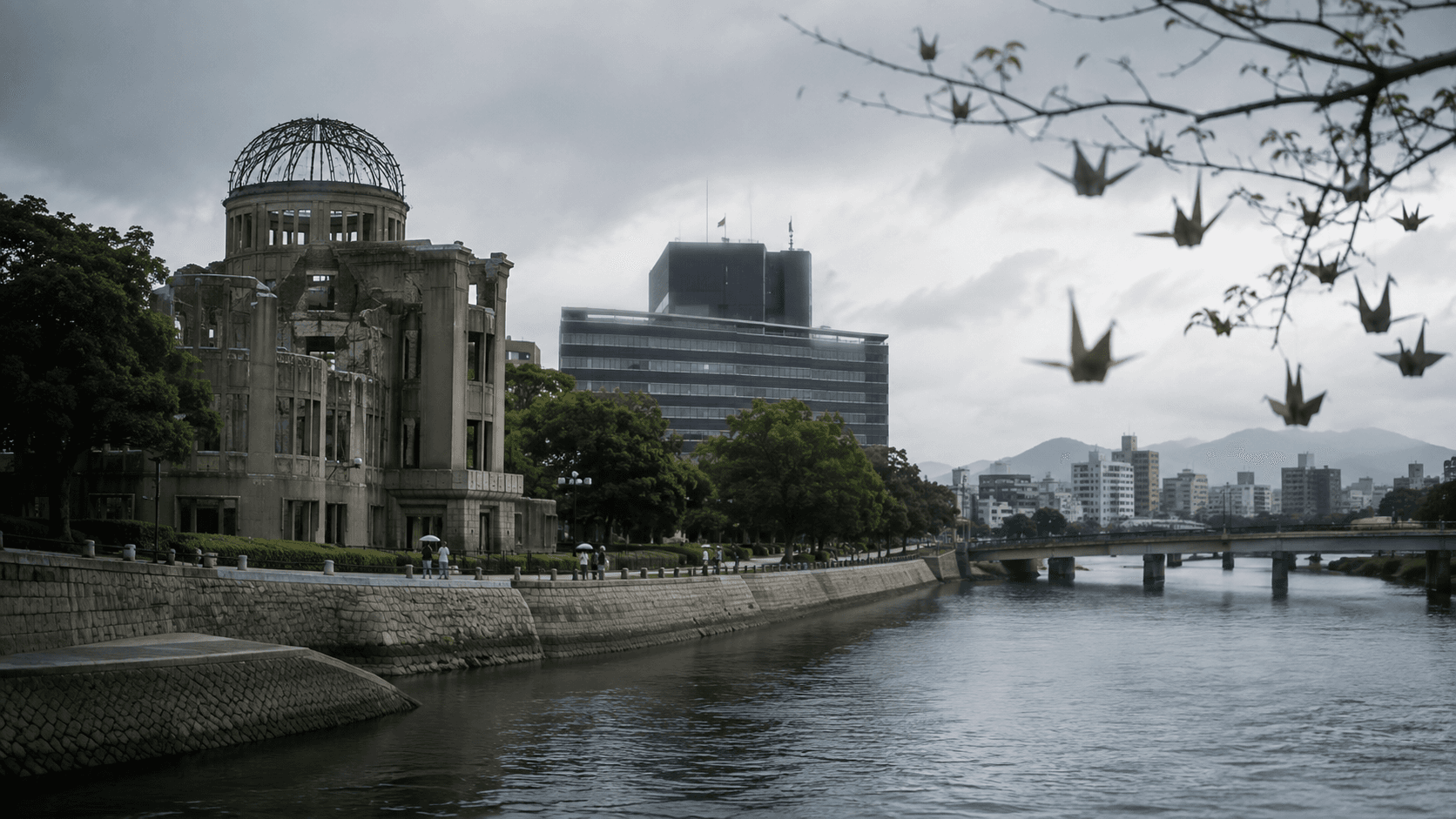
Masuji Ibuse · Chugoku, Hiroshima
Retracing Masuji Ibuse's Black Rain to Hiroshima and Jinsekikogen: A Literary Travel Guide
Follow the real diary behind Ibuse's Black Rain — from Hiroshima's Peace Memorial Park to the small Chugoku mountain town where the survivor whose journal inspired the novel was born.
Black Rain
Masuji Ibuse
Black Rain is centered around the story of a young woman who was caught in the radioactive "black rain" that fell after the bombing of Hiroshima. lbuse bases his tale on real-life diaries and interviews with victims of the holocaust; the result is a book that is free from sentimentality yet manages to reveal the magnitude of the human suffering caused by the atom bomb. The life of Yasuko, on whom the black rain fell, is changed forever by periodic bouts of radiation sickness and the suspicion that her future children, too, may be affected. lbuse tempers the horror of his subject with the gentle humor for which he is famous. His sensitivity to the complex web of emotions in a traditional community torn asunder by this historical event has made Black Rain one of the most acclaimed treatments of the Hiroshima story.
Open Black Rain and the first thing that hits you isn't an explosion — it's weather. Shigematsu Shizuma, the novel's narrator, sits down after the war to copy out his diary of August 1945 word for word, because a rumor is going around that his niece was exposed to radiation, and a clean written record might be the only thing that saves her marriage prospects. What follows reads less like a novel than like someone's actual notebook: the sky over Hiroshima going the color of a bruise, then rain falling that isn't rain — thick, black, oily — landing on sleeves and rooftops and leaving stains that won't wash out. Masuji Ibuse, writing in 1966, didn't invent that texture from nothing. He built it on a real survivor's real wartime diary, and that's the thread this trip follows: from the city where the sky actually did that, to the quiet mountain village the man behind the diary called home.
A novel written in someone else's handwriting
Ibuse himself was 500 kilometers away in Tokyo when the bomb fell — Black Rain isn't a memory, it's a document he was handed. As the story goes, he first heard about the diary from its keeper over a fishing trip, of all things: two men with lines in the water, and one of them casually holding, in a drawer at home, the most terrible week of his life written down in his own hand. Ibuse started serializing his version in the magazine Shincho in January 1965, and the book that resulted keeps its diary's flat, dated, almost bureaucratic tone on purpose — because that flatness is what makes the black rain, when it finally falls in the text, so hard to shake off.
Stop 1: Hiroshima Peace Memorial Park — stand where the sky did that
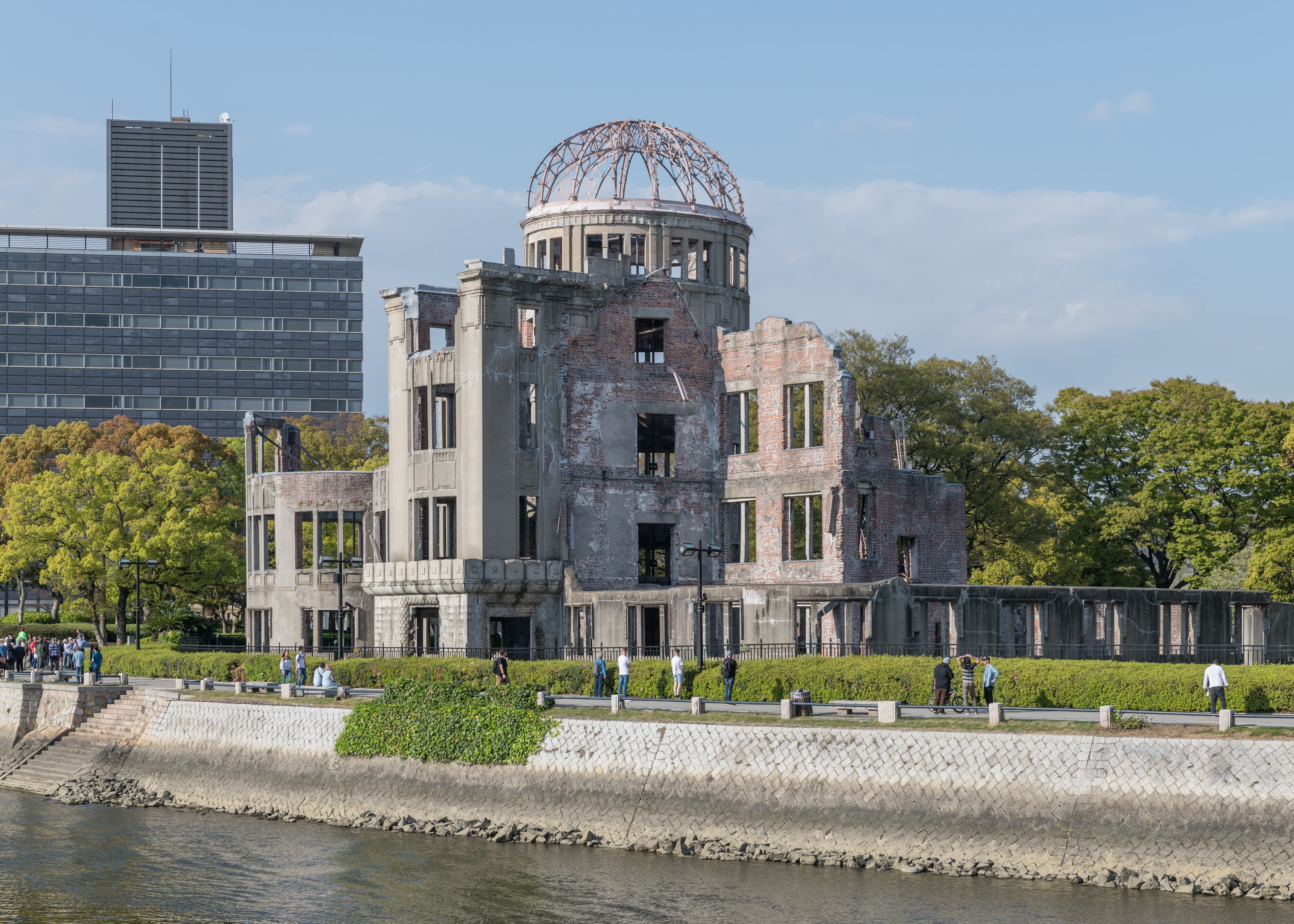
The diary's Hiroshima entries are set in the days right after August 6, 1945 — the same days the black rain fell over this exact patch of city. There's no reenactment to see, no plaque that marks "here is where the rain fell"; the closest you get is standing in front of the Atomic Bomb Dome (原爆ドーム), the gutted shell of the old Industrial Promotion Hall, left half-standing near the hypocenter on purpose, and letting the quiet do the work the novel's prose does on the page. The Peace Memorial Museum next door fills in what the ruin can't say out loud.
Go early, before the tour groups arrive. The park empties out fastest in the first hour after opening, and that's the closest this place gets to the hush of a diary entry.
- Getting there: From Hiroshima Station's south exit, ride the Hiroden streetcar (Line 2 toward Miyajima-guchi or Line 6 toward Eba) roughly 15–20 minutes to the Genbaku Dome-mae stop — the Dome and the park are both under a minute's walk from there.
- Good to know: The Peace Memorial Museum charges admission and keeps daytime hours; the Dome and the surrounding park are free and open around the clock.
Stop 2: Komohata, Jinsekikogen Town — the diary's quiet, off-page life
By most accounts, the man behind Shizuma's diary was born in and later returned to Komohata (小畠), a small village folded into the mountains of what's now Jinsekikogen Town, close to the Okayama border and about as far from Hiroshima's wartime chaos as you can get while staying in the same prefecture. That distance is the point of coming here: after the flat horror of the city sections, the novel — and this trip — moves somewhere the war never quite reached the same way.
In Tsutsujigaoka Park, a stone monument carries a single line, and it deserves to be read slowly rather than skimmed:
"War is hateful. It doesn't matter who wins or loses — I just want it to be over quickly."
A short walk away, the local museum Shimari (志麻利) keeps around 50 objects tied to the book's real backstory: Ibuse's handwritten manuscript pages, a photograph of the writer and the diarist standing together, letters that passed between them, copies of the original Shincho serialization. It's a small, unhurried room, and it's the closest thing this trip has to physical proof that all of this — the fishing trip, the diary, the friendship — actually happened between two real people.
- Getting there: This is genuinely rural, and it should feel that way — from Fukuyama Station, Chugoku Bus runs a connection through Abuki toward Komohata in roughly two hours total, with limited departures. Most visitors will find a rental car far more practical than chasing a rural bus timetable; check current schedules before you plan around the bus.
- Good to know: Give yourself the whole afternoon here rather than rushing — this stop rewards slowing down, not ticking a box.
Practical travel notes
- Best time to visit: The Peace Memorial Park is a place for reflection, not a season — go any time, early morning if you can. Komohata's mountain roads are easiest outside winter snow.
- Base yourself in: Hiroshima City for the Peace Memorial Park; treat Komohata as a full day or an overnight detour rather than something bolted onto a city itinerary.
- Language: the Hiroshima Peace Memorial Museum has extensive English materials; Komohata's rural sites are Japanese-only, so a translation app earns its keep out there.
- The book itself: the standard English translation, titled Black Rain, is by John Bester, published by Kodansha International.
Tabi Tales may earn a commission from hotel, tour, and book links on this page at no extra cost to you. See our affiliate disclosure for details.