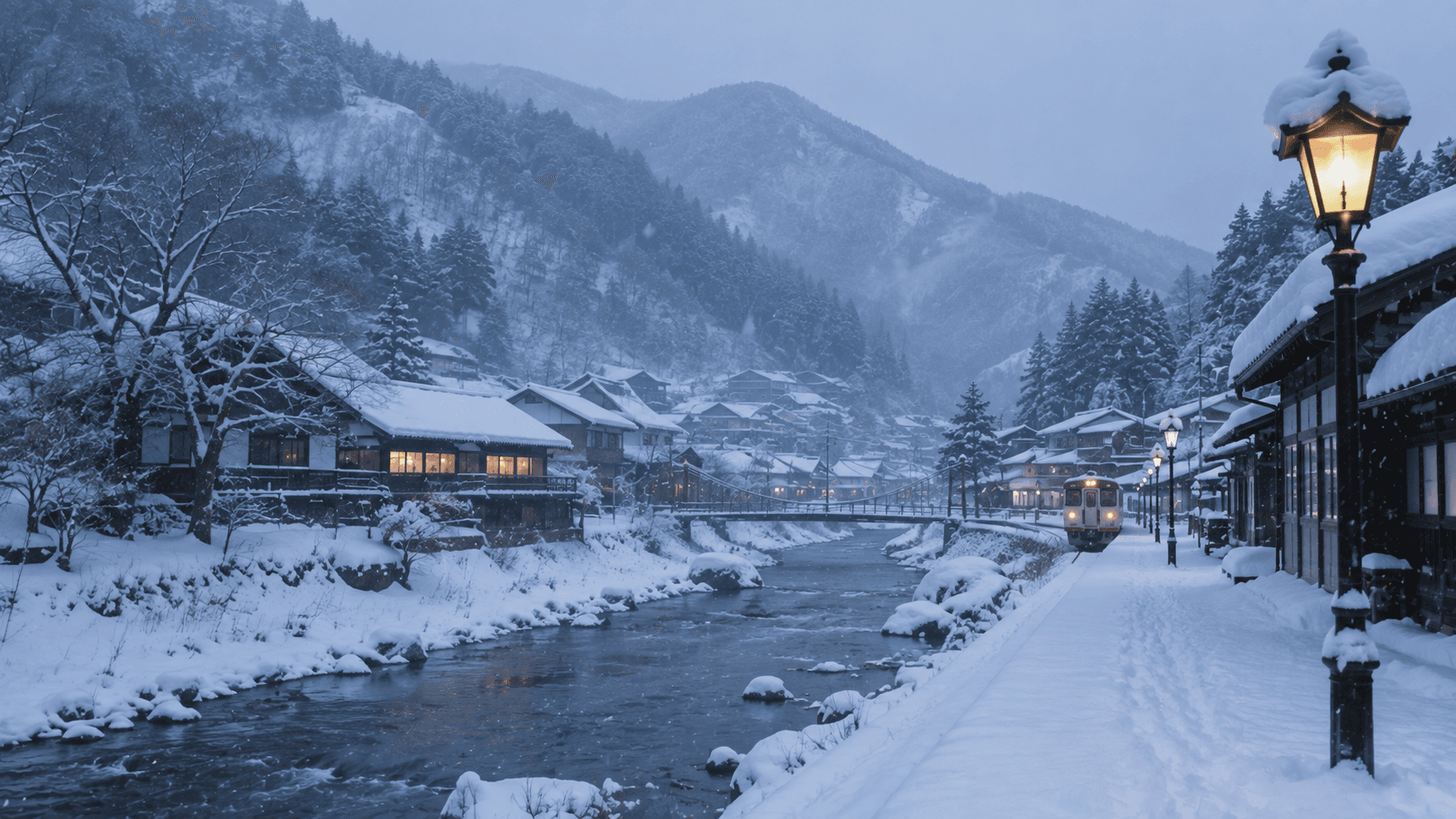
Yasunari Kawabata · Chubu, Niigata
Following Yasunari Kawabata's Snow Country to Echigo-Yuzawa: A Literary Travel Guide
Trace the real hot-spring town behind Kawabata's Nobel Prize-winning novel Snow Country — from the mountain tunnel of its famous opening line to the actual room where he wrote it.
"The train came out of the long tunnel into the snow country." It's the most famous opening line in modern Japanese fiction, and it isn't dressed up — it's a plain description of something you can still do yourself. Ride the train out of Tokyo, watch the mountains close in around the tracks, and then the window goes white all at once. That specific hush, the sound a place makes once snow has muffled everything, is still there to step into, at the same station the line describes.
Snow Country (雪国, Yukiguni), completed in its final form in 1948, follows Shimamura — a wealthy Tokyo dilettante, a self-styled expert on Western ballet he's never actually seen performed, living comfortably off money he didn't earn — on repeated visits to a hot-spring town, and his drifting, never-quite-resolved relationship with a geisha named Komako. Kawabata became the first Japanese writer to win the Nobel Prize in Literature in 1968, with the Nobel committee naming Snow Country among the works that earned it. He wasn't inventing this setting from nothing: he kept returning to one actual inn, in one actual town, and wrote parts of the book in a room that's still standing today.
Stop 1: Echigo-Yuzawa Station — the tunnel, still
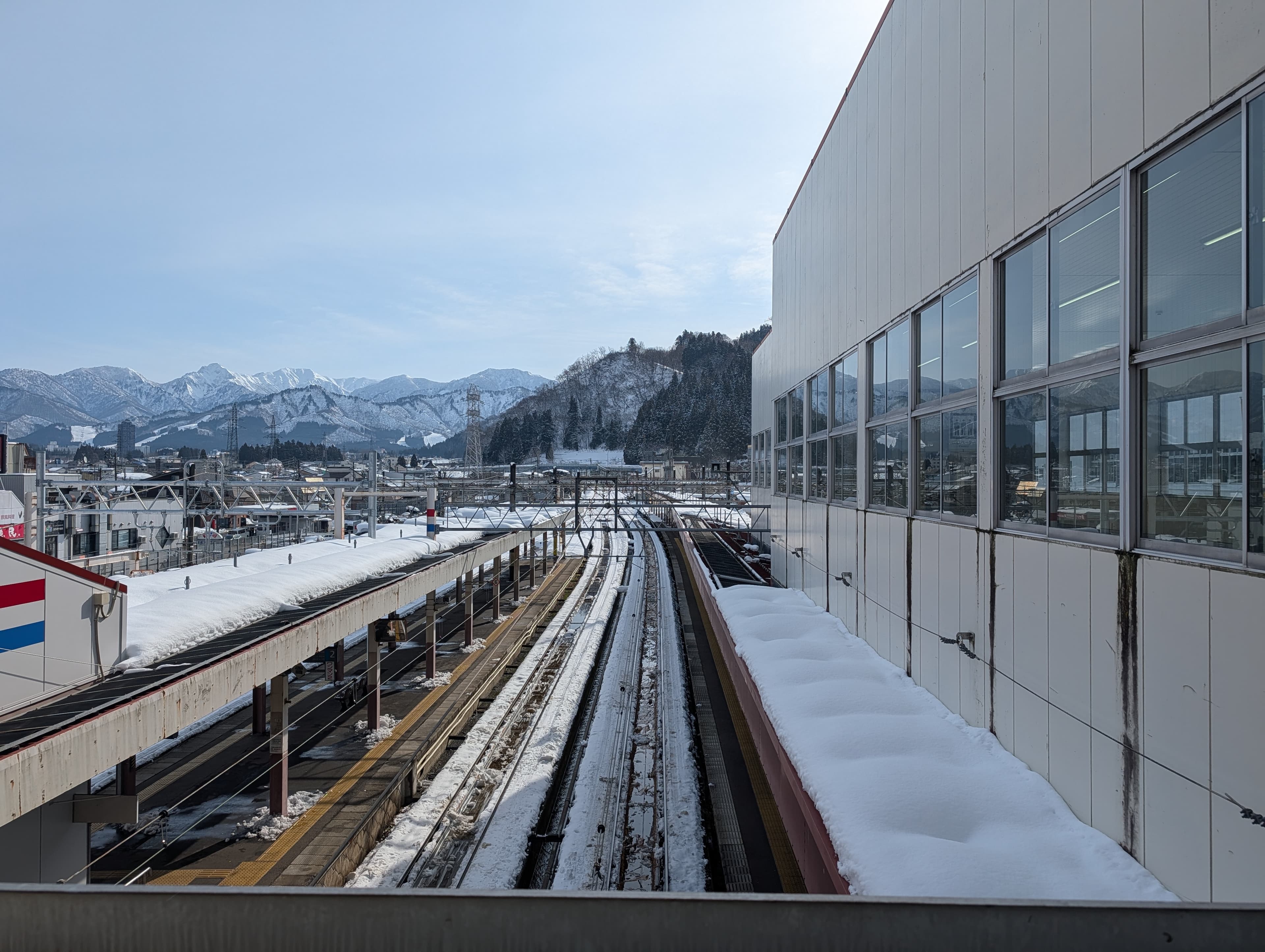
There's no reenactment needed here — the geography the opening line describes hasn't gone anywhere. The mountains between Tokyo and Niigata Prefecture genuinely do close in around the tracks, and a real tunnel genuinely does open onto a valley that holds snow long after the capital has none. Step off the train in January and the line stops being a famous quote and starts being just an accurate weather report.
The town on the other side, Echigo-Yuzawa, is a working hot-spring resort that was already drawing Tokyo visitors — Kawabata among them — decades before the novel made it a literary landmark.
- Getting there: The Joetsu Shinkansen runs direct from Tokyo Station to Echigo-Yuzawa in roughly 75–80 minutes.
- Good to know: Whatever season you arrive in, you're retracing the same approach the book opens with — but December through March is when the valley actually looks like the novel describes it.
Stop 2: Takahan Ryokan's Kasumi-no-ma — the room the novel was written in

Kawabata started visiting Yuzawa in the autumn of 1934 and kept coming back, staying at Takahan and writing in a room called Kasumi-no-ma — "the room of mist." He is generally understood to have based Komako, at least in part, on a geisha he came to know here named Matsue. In the novel, Shimamura himself stays a repeat visitor too, showing up in Komako's life and leaving again without either of them settling anything — a pattern Kawabata seems to have lived out here in some form before he ever wrote it down.
Takahan is still a working ryokan today, not a museum piece behind glass — which means this stop asks something different of you than a monument would. You're not viewing history here; you'd be sleeping in the same building it happened in.
- Getting there: A short walk or quick taxi ride from Echigo-Yuzawa Station, in the middle of the onsen district.
- Good to know: If you want to see the room itself rather than stay overnight, confirm with the ryokan directly — access depends on whether they're accommodating outside visitors at the time.
Stop 3: Yukiguni-kan — where Komako's real room ended up
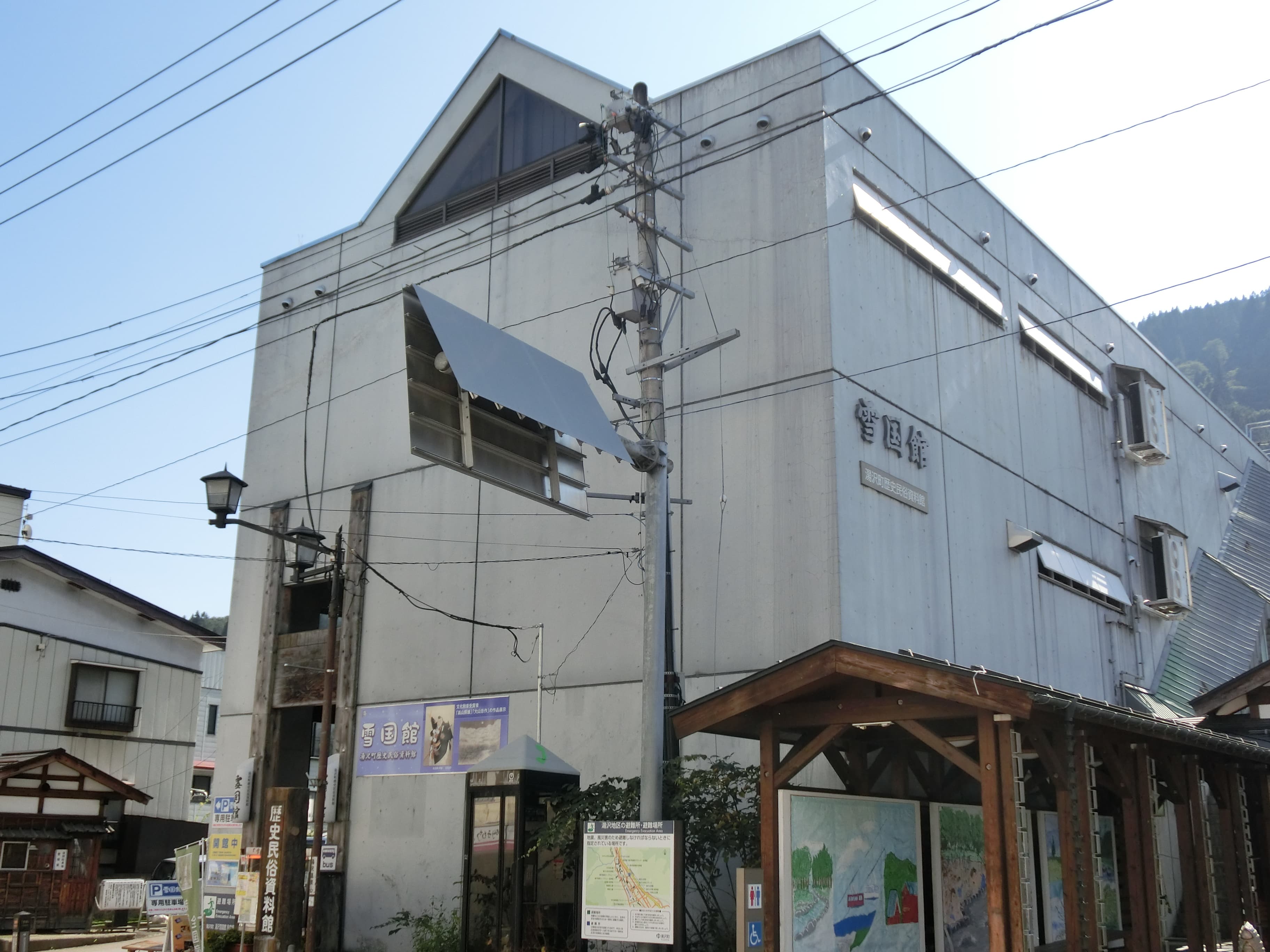
Yukiguni-kan, Yuzawa's local history museum, holds the room Matsue actually lived in, relocated and preserved so visitors can stand inside it rather than just read about it — alongside Kawabata's manuscript pages and photographs from his years of visits. It's a small, unhurried place, and it's the closest this trip gets to putting a real face on Komako rather than just a fictional one.
Coming here after Takahan works well: you've just seen the room where the writing happened, and now you're standing in the room the writing was, in some sense, about.
- Getting there: Central Yuzawa, an easy walk from the station and the onsen streets.
- Good to know: Standard local-museum hours apply — check current opening days before making a special trip, as small municipal museums in Japan often close one weekday.
Practical travel notes
- Best time to visit: Winter (roughly December–March) matches the novel's atmosphere most directly — genuine snow country, not a postcard version of it. The onsen town itself is pleasant in any season if snow isn't the point of your trip.
- Base yourself in: Echigo-Yuzawa itself. Everything in this guide is within walking distance of the station, and it's an easy day trip or overnight from Tokyo.
- Language: The station area is well set up for visitors, but Takahan and Yukiguni-kan lean Japanese-only — a translation app helps.
- The book itself: the standard English translation, titled Snow Country, is by Edward Seidensticker, published by Vintage International.
Tabi Tales may earn a commission from hotel, tour, and book links on this page at no extra cost to you. See our affiliate disclosure for details.