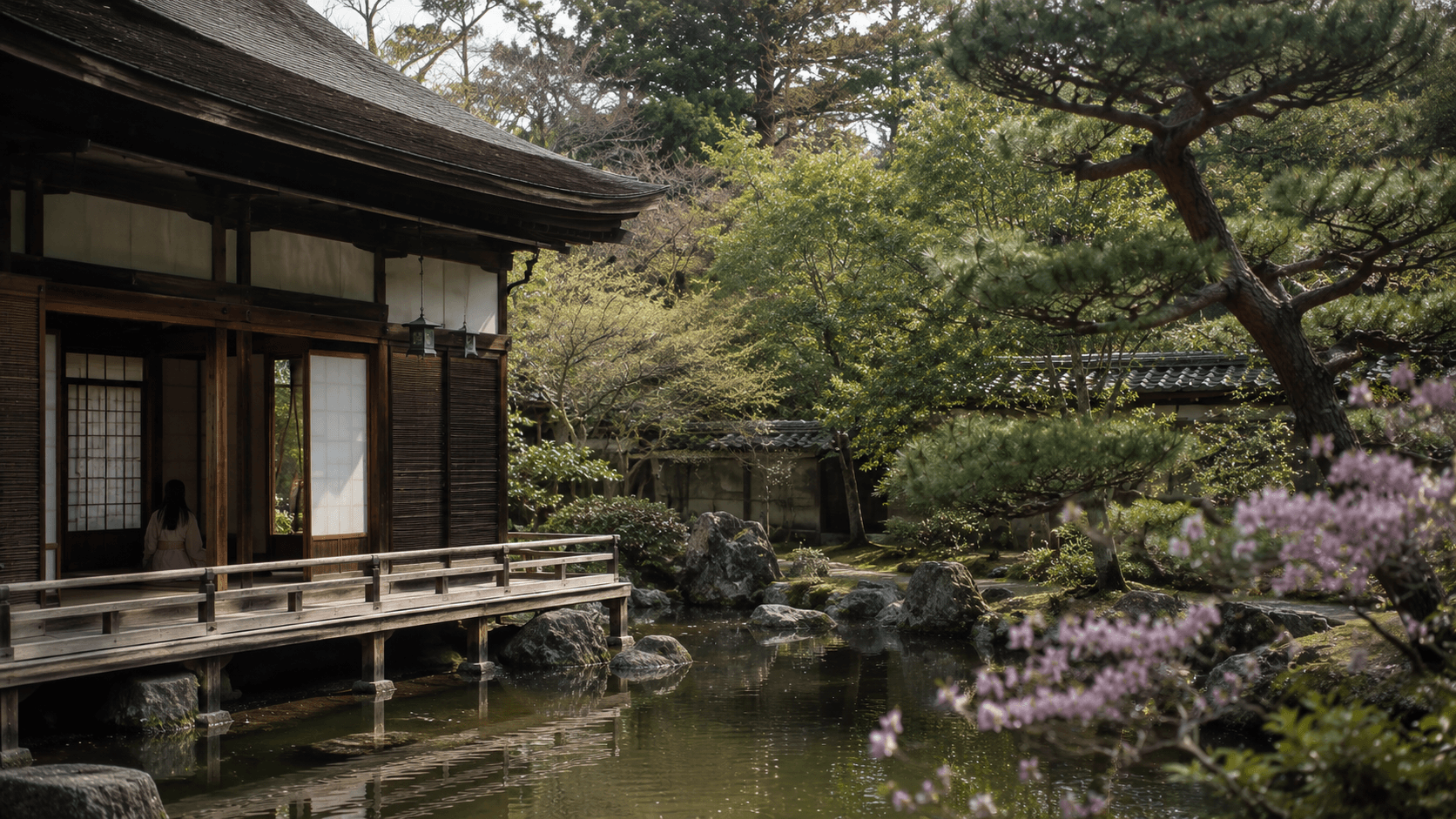
Murasaki Shikibu · Kansai, Kyoto, Shiga
Following Murasaki Shikibu's The Tale of Genji to Kyoto and Otsu: A Literary Travel Guide
Trace the real Kyoto-area places behind The Tale of Genji: the Otsu temple where Murasaki Shikibu began writing it, a real shrine from the story, and Uji.
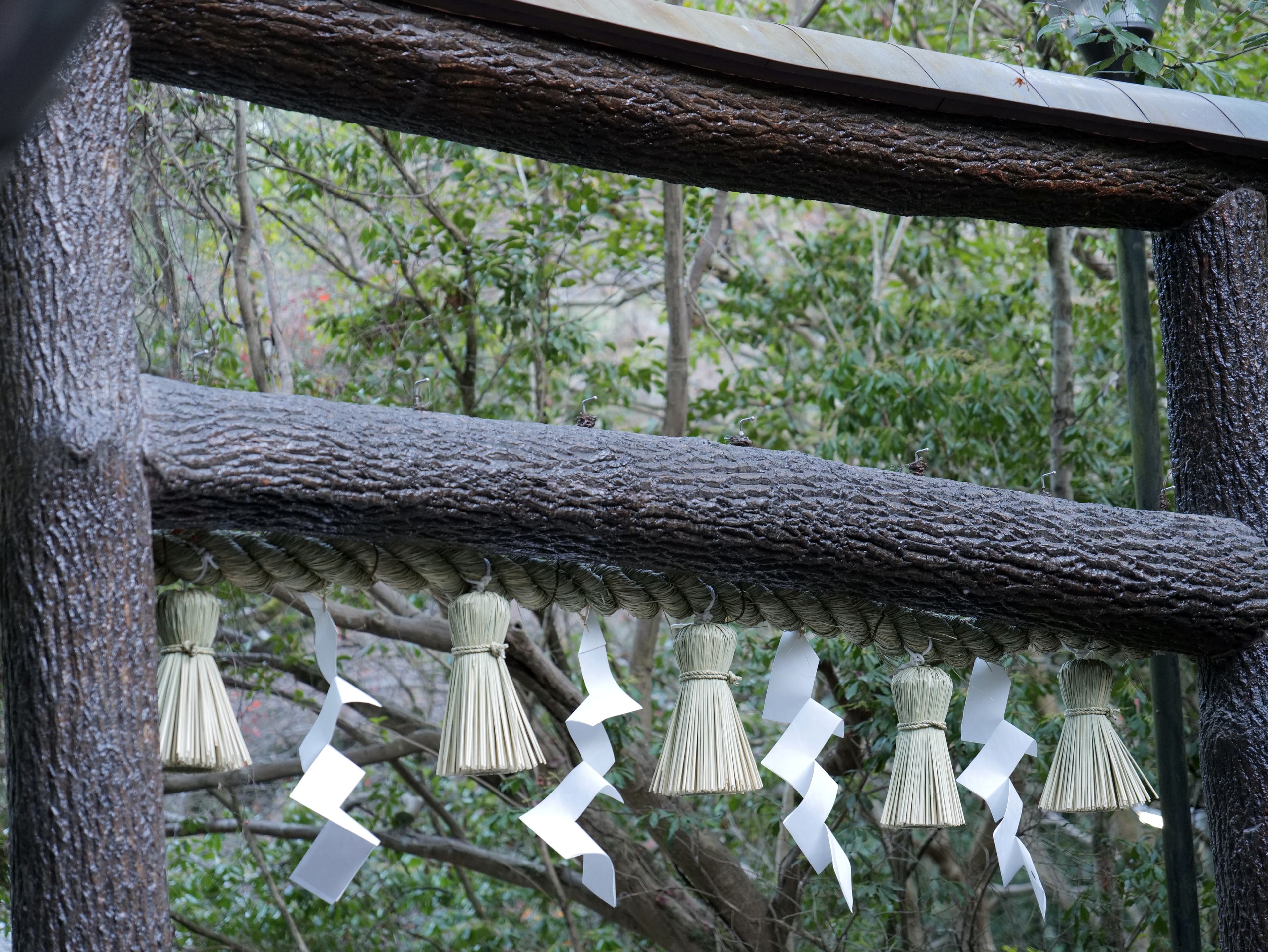
Walk up to Nonomiya Shrine at dusk, past its plain, unpainted wooden torii gate, and you can feel exactly what Genji feels arriving at the same spot in the story: the hush of a place already given over to something larger than the people standing in it. Two people who've hurt each other badly, meeting once more before a long goodbye, in a spot that already belongs half to this world and half to the sacred one.
The Tale of Genji (源氏物語, Genji Monogatari) was written by Murasaki Shikibu, a lady-in-waiting at the Heian-era imperial court, and was already being read and talked about there by around 1008. It follows the shining prince Hikaru Genji through decades of court life, love, and loss — and then, in its final chapters, the generation after him. Fifty-four chapters, often called the world's first novel.
Unlike most classical literature this old, the real places behind it aren't lost to time. Several are still standing, some barely changed, over a thousand years later.
This guide follows three of them, spread across the greater Kyoto area: the temple where Murasaki Shikibu is said to have begun writing, a shrine where one of the novel's most quietly devastating scenes plays out, and the riverside town that gives the story's famous final chapters their name. They sit in three different directions from the city, so treat this as a menu of half-day trips rather than one single day out — more on pacing in the practical notes below.
Stop 1: Ishiyama-dera, Otsu — where the story is said to have begun
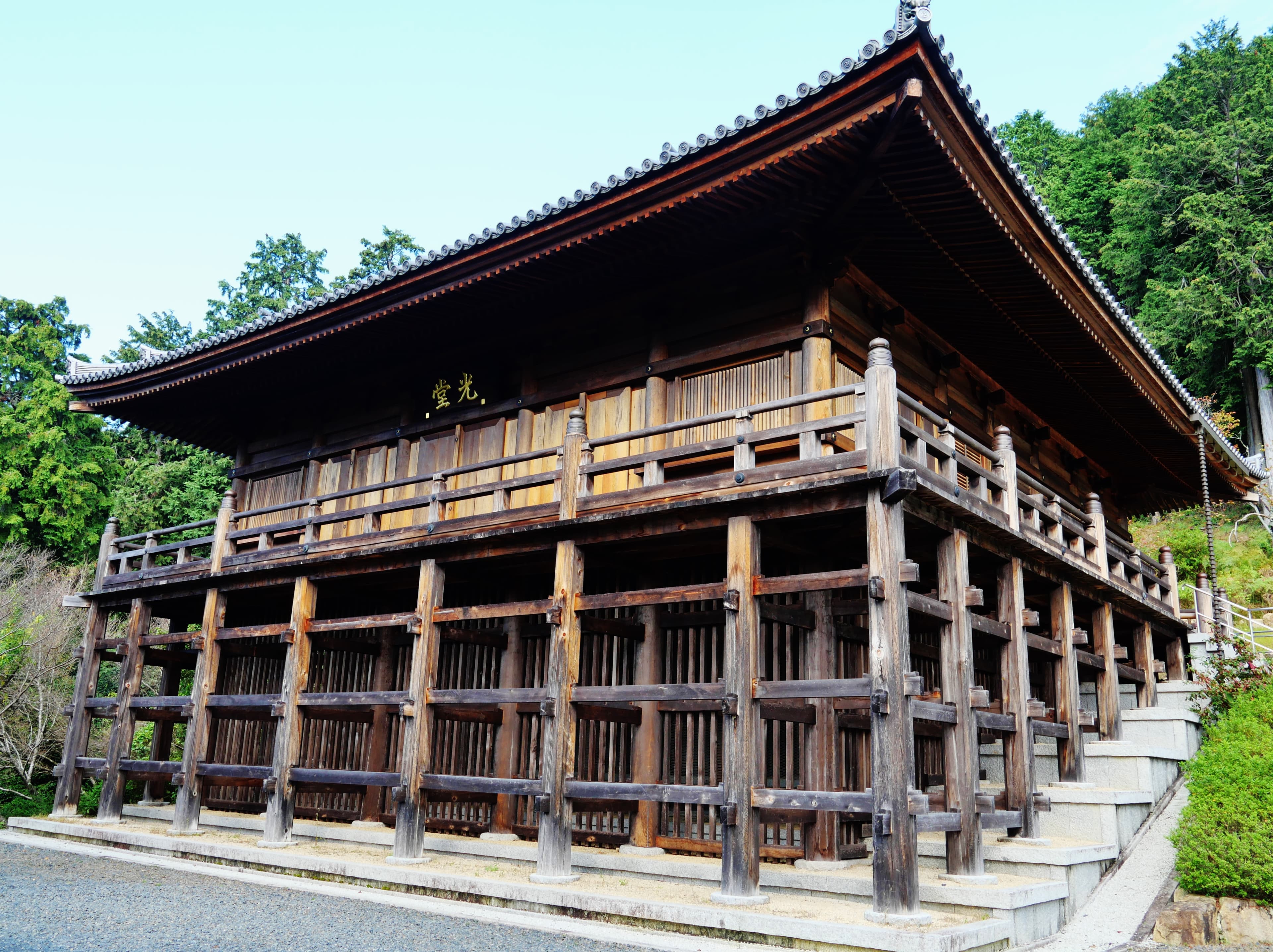
Tradition holds that in August 1004, Murasaki Shikibu secluded herself at Ishiyama-dera, a temple overlooking Lake Biwa, to pray and think through a new work she'd been asked to write. On the night of the full moon, watching it reflected on the lake, the shape of the story came to her — beginning, by legend, with the chapters now known as "Suma" and "Akashi." The tale of a court legend inspiring a court novel is likely embellished with later retelling, and no contemporary document proves it happened exactly this way. But it's a genuinely old story, echoed in the temple's own centuries-old traditions, and Ishiyama-dera has taken it seriously for a very long time.
The room where she's said to have written is still part of the temple's main hall today, known simply as Genji-no-ma (源氏の間, the Genji Room), with a life-size figure of her at her desk. Ishiyama-dera is also, independent of the legend, one of the classic moon-viewing spots in the Kyoto-Otsu area — "the autumn moon over Ishiyama" is one of the Eight Views of Omi, a centuries-old list of the region's best scenery.
- Getting there: From Kyoto Station, take the JR Biwako Line to JR Ishiyama Station (around 15 minutes), then a short bus ride or a longer walk on to the temple gate. Total door-to-door time is roughly half an hour; check current bus schedules before you go, since departures aren't frequent.
- Good to know: The temple grounds are built into a hillside of exposed wollastonite rock (the "stone mountain" in Ishiyama-dera's name), which is worth the visit even without the literary connection.
Stop 2: Nonomiya Shrine, Arashiyama — the farewell scene from "Sakaki"
In the "Sakaki" chapter, Genji's great love Lady Rokujo — one of the novel's most complicated characters — has resolved to leave the capital for good. Her young daughter has just been appointed Ise Priestess, a real Heian-period office: an imperial princess or close relative sent to serve the sun goddess at Ise Grand Shrine, effectively withdrawn from court life for years at a stretch. Worn down by her long, unhappy involvement with Genji, Lady Rokujo decides to go into that exile alongside her daughter rather than stay behind.
Before they leave the capital, mother and daughter withdraw together to Nonomiya, a shrine in the wild fields outside the city, where the future priestess must spend a year in ritual purification before Ise. Genji rides out one evening to see Lady Rokujo one last time.
What follows, as dusk turns to a dawn parting by the next morning, is one of the novel's quietest, saddest scenes. Two people who have hurt each other badly, sitting close in the dark, talking around everything that actually needs saying. They talk until the sky starts to lighten, and then she leaves anyway.
Nothing is resolved and nothing is undone. Lady Rokujo has already decided to go, and Genji has already spent this love the way he spends most things in the story — carelessly, and too late to fix it.
Stand at the gate long enough and that's the whole scene, really: two people who ran out of time to say the right thing, in a place built for exactly that kind of leave-taking. The shrine's torii gate is deliberately unpainted, bare wood left to weather naturally rather than the vermilion red used almost everywhere else in Japan — a mark of the shrine's original role as a temporary, ritually pure site, not a permanent one. It's a detail Murasaki Shikibu describes directly in the text, and it's exactly what still greets visitors today.
- Getting there: About an 8-minute walk from Randen Arashiyama Station, or roughly 10 minutes on foot from JR Saga-Arashiyama Station. It sits just off the main bamboo grove path, easy to combine with the rest of an Arashiyama visit.
- Good to know: The text has Genji arrive at dusk and stay talking with Lady Rokujo until they part at dawn, so both ends of the day suit the scene. In practice, early morning is also simply quieter — Arashiyama's bamboo grove draws large crowds by mid-morning, and Nonomiya sits right beside it.
Stop 3: Uji — the setting of the story's final ten chapters
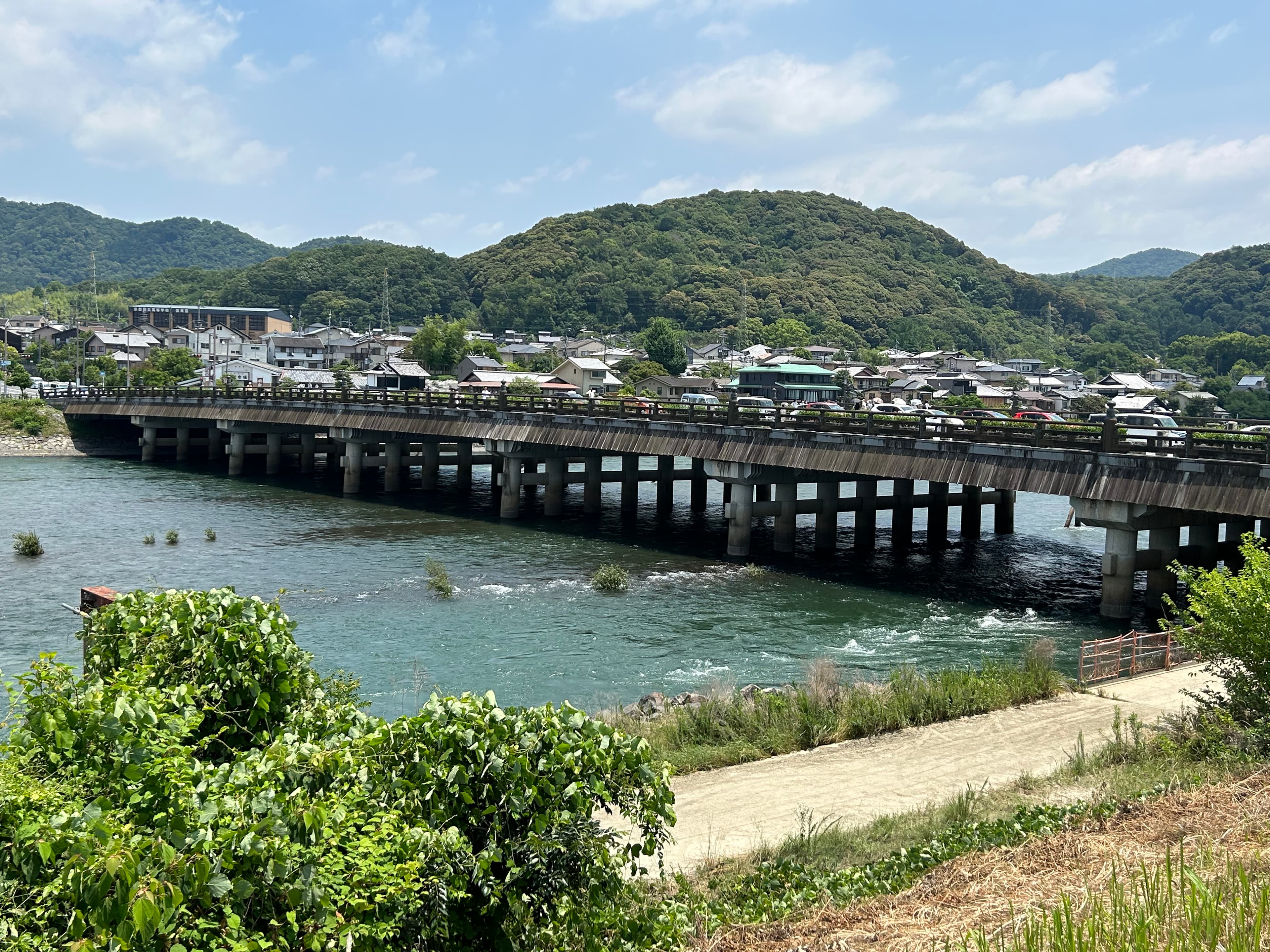
The novel's last ten chapters move the story from the capital to Uji, a town on the river south of Kyoto, and are known collectively as the Uji Jujo (宇治十帖, the "Ten Uji Chapters"). After Genji's death — a death the novel famously never narrates on the page, marked only by a chapter title with no text beneath it — his nominal son Kaoru travels repeatedly between Kyoto and Uji to visit the reclusive Eighth Prince and his daughters.
It's a story that trades the earlier chapters' court glamour for something colder, foggier, and more melancholic, and the setting does real work: Uji's own name was already a poetic byword for gloom in Heian-period wordplay, since "Uji" (宇治) sounds the same as ushi (憂し), meaning sorrowful or wretched — a pun readers of the time would have caught instantly. Uji Bridge, first built in the 7th century and rebuilt many times since, is named directly in the text and remains the town's defining landmark.
The Tale of Genji Museum (源氏物語ミュージアム), a short walk from the bridge, is built specifically around these chapters, with full-scale set reconstructions, an animated short film, and English-language panels throughout — worth the stop if you'd rather see the Uji chapters' world laid out in one place than piece it together from the town itself.
- Getting there: JR Uji Station is the simplest option from a central Kyoto base — about 20 minutes direct from Kyoto Station on the JR Nara Line. Keihan Uji Station is an alternative if you're already elsewhere on the Keihan network, but it doesn't connect from Kyoto Station directly and involves a transfer, so JR is the better default. The bridge and museum are a short walk from either station.
- Good to know: Uji is equally famous today for matcha — it's one of Japan's great tea-growing regions — so a museum visit pairs easily with a proper cup afterward.
Practical travel notes
- Best time to visit: Any season works, though autumn adds an extra layer to Nonomiya and Ishiyama-dera in particular — both are within reach of good koyo (fall foliage) spots. Ishiyama-dera's "autumn moon" reputation makes the nights around the mid-autumn full moon a particularly atmospheric time to go, if your dates allow it.
- Base yourself in: Central Kyoto. Ishiyama-dera is about 30 minutes door to door, Nonomiya about 20–25 minutes, and Uji 20–30 minutes depending on the line — but they're in three different directions (Otsu to the east, Arashiyama to the west, Uji to the south), so this reads as three separate half-day trips from the same base, not one loop. Pair two in a single day only if you don't mind the backtracking.
- Language: All three sites are well set up for visitors, with English signage at Ishiyama-dera and Uji's museum especially thorough.
- The book itself: the standard modern English translation is Royall Tyler's, published by Penguin Classics, with extensive notes on the court customs and poetry that can otherwise be hard to follow from outside the period. Tyler renders Lady Rokujo's title as "Rokujo Haven" — worth knowing if you go looking for the Nonomiya scene in English.
Tabi Tales may earn a commission from hotel, tour, and book links on this page at no extra cost to you. See our affiliate disclosure for details.