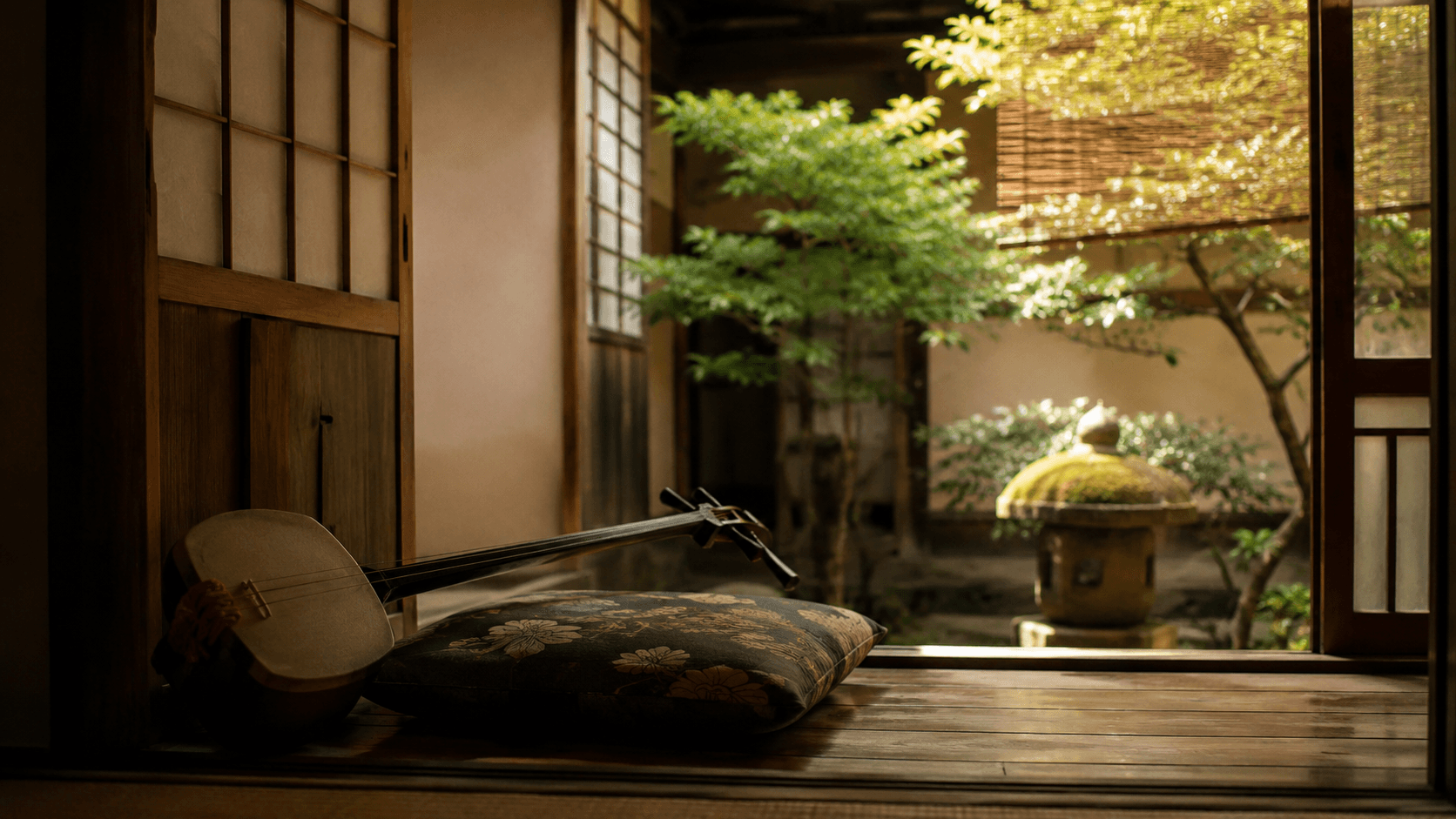
Junichiro Tanizaki · Kansai, Osaka
Retracing Junichiro Tanizaki's A Portrait of Shunkin to Osaka's Doshomachi: A Literary Travel Guide
Follow the real Osaka pharmacy district behind Tanizaki's A Portrait of Shunkin (Shunkin Sho) — including the shrine that still marks the novella's setting with its own stone monument.
A Portrait of Shunkin
Junichiro Tanizaki
“He saw her body not as a sculptor or painter might, to whom it was just an object of aesthetic beauty, but with the devotion of a priest viewing the sacred image of a goddess. To his eyes, the faults, too, were precious, and he took pride in them, because they were the only marks that proved his life with Shunkin was real. He found in them an ineffable charm, a charm beyond the power of art to express.” "A Portrait of Shunkin" is one of the most renowned stories in Jun'ichirō Tanizaki's collection "Seven Japanese Tales." It is a deeply evocative narrative that delves into themes of beauty, devotion, and the complexities of human relationships.
A disfiguring accident leaves Shunkin's face scarred, and Sasuke — the servant boy who has spent his whole life as her attendant, student, and quiet shadow — responds by taking a needle to his own eyes. He blinds himself on purpose, so the last face he'll ever remember is the one he already loved, not the one the accident left behind. It's the single most shocking act in Junichiro Tanizaki's 1933 novella A Portrait of Shunkin (春琴抄, Shunkin Sho), and it's also the moment the book stops being a story about a blind koto and shamisen virtuoso and becomes a story about how far devotion can be pushed before it curdles into something else entirely.
Tanizaki frames the whole thing as a straight retelling of an old biographical pamphlet, Mozuya Shunkin-den ("The Life of Shunkin of the Mozuya"), complete with footnote-like asides questioning the source's reliability — a fictional device, not a real found document. It worked well enough that after publication, readers reportedly wrote in asking where they could find Shunkin's grave, as though the pamphlet had been real all along. That's the thread this trip follows: not a biography, but a fiction so precisely anchored to one real Osaka street that people went looking for it anyway.
A fictional pamphlet set in a very real trade district
Tanizaki never claimed Shunkin was autobiographical, but he anchored it to a real, specific place. In the story, Shunkin is introduced as the second daughter of the Mozuya, medicine wholesalers of Doshomachi — and Doshomachi wasn't just a plausible-sounding backdrop. Since the Edo period it has been Osaka's actual wholesale medicine district, lined with the trading houses that supplied pharmacies across the country, and it still fills that role today.
Some scholars have also floated biographical inputs into Shunkin's character, pointing to Tanizaki's own years studying traditional Japanese music in Kansai — though the specifics of any real-life model are debated rather than settled, and worth holding loosely.
Stop 1: Sukunahikona Shrine, Doshomachi — a stone monument to the story
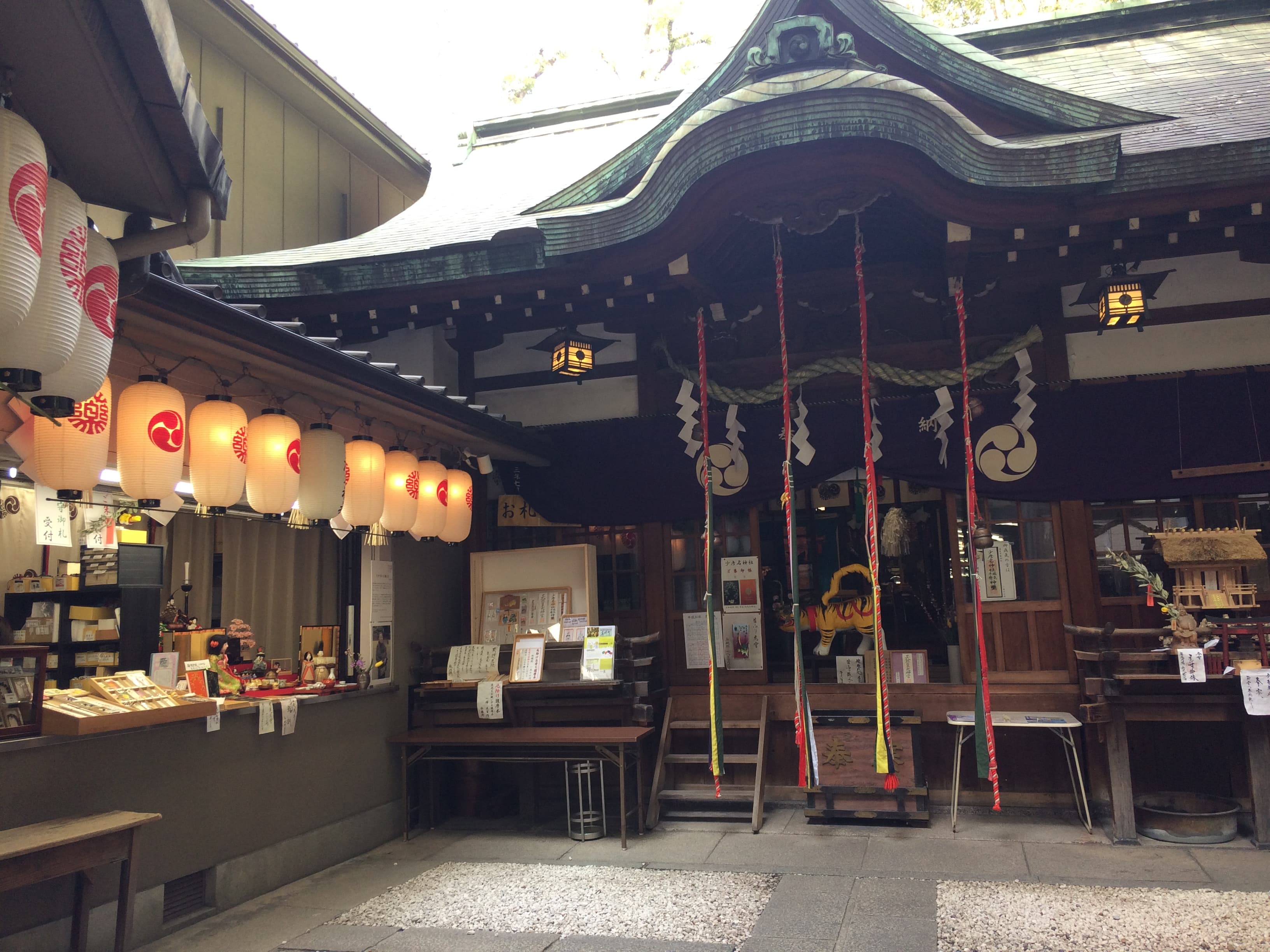
Doshomachi's own guardian shrine, Sukunahikona Jinja (少彦名神社), still stands among the district's office buildings, dedicated to the gods of medicine and popularly nicknamed Shinno-san after the Chinese medicine deity Shennong. Near its entrance is a stone monument inscribed with the opening lines of A Portrait of Shunkin — a direct, physical link between the shrine's own neighborhood and Tanizaki's fictional Mozuya family.
Stand in front of it and the trick the novella plays on its readers suddenly makes sense. This is a real shrine, in the real medicine district the book describes, with the book's own words carved into stone a few steps from the gate — the exact kind of overlap that once had readers convinced Shunkin's grave was out there somewhere too. Fiction and place blur here in a way that's hard to get from the page alone.
The small Doshomachi Museum of Medicine (くすりの道修町資料館) sits nearby, worth a quick look if it's open, though the shrine and its monument are the real reason to come.
- Getting there: On the Sakaisuji Line, Kitahama Station's Exit 6 puts you about 5 minutes from the shrine on foot. On the Keihan Main Line at the same station, use Exit 27 instead — the two lines surface in separate concourses, so Exit 6 won't connect from the Keihan side — and figure closer to 8 minutes from there. From Yodoyabashi Station (Midosuji Line), Exit 11, figure roughly 8–10 minutes on foot.
- Good to know: Both the shrine and its small museum are free to visit. Doshomachi is still lined with pharmaceutical company offices today, so the "medicine street" backdrop of the novella is a working district, not a preserved relic.
Stop 2: Former Konishi Residence, Doshomachi — the merchant house the story imagines
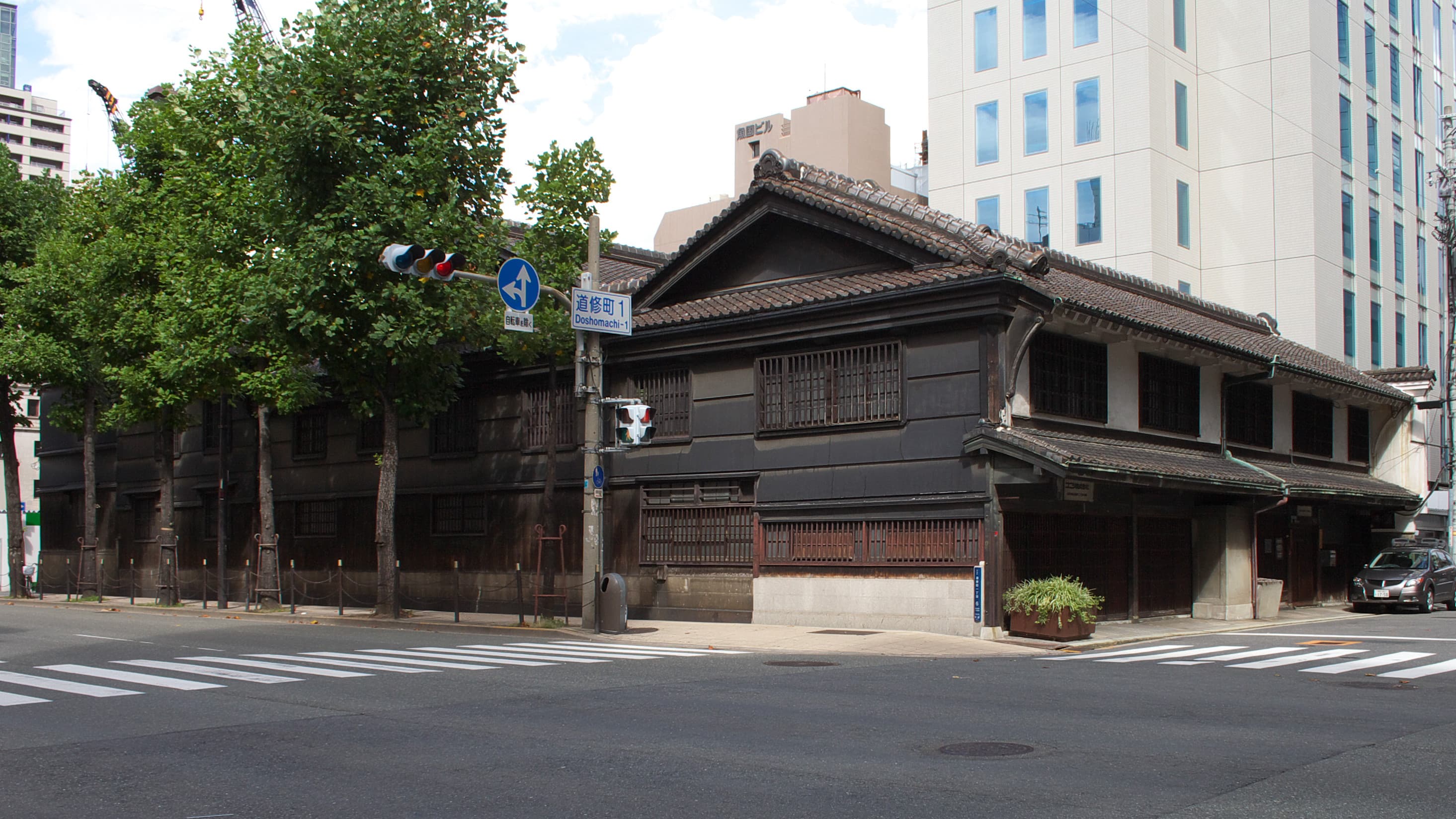
No building is confirmed as the literal Mozuya house, but the Former Konishi Residence (旧小西家住宅), a block from the shrine, is the closest thing Doshomachi has to seeing that world firsthand. Completed in 1903 for the Konishi family's medicine business — the forerunner of today's Konishi Co. — it's one of the few merchant houses on the street to survive both wartime bombing and the 1995 Great Hanshin earthquake essentially intact, and is now a nationally designated Important Cultural Property.
- Getting there: Kitahama Station, about 1 minute on foot.
- Good to know: The exterior is visible any time, but seeing inside requires an advance reservation through Konishi's own booking system — and interior viewings only run on a couple of set days each week, with a handful of time slots per day, not a daily walk-in option. Check current days and slots before you build a day around it, since showing up on the wrong day means exterior-only.
Practical travel notes
- Best time to visit: Any season — both stops are compact and mostly street-level, and combine easily with a visit to nearby Kitahama or the Nakanoshima riverside. If you want to see inside the Konishi Residence, plan around its reservation days first; everything else here is flexible.
- Base yourself in: central Osaka — Doshomachi is a few minutes' walk from both Kitahama and Yodoyabashi stations on the Midosuji Line.
- Language: shrine and street signage is Japanese-first with some English; the Konishi Residence reservation process is primarily in Japanese.
- The book itself: the standard English translation, titled A Portrait of Shunkin, is by Howard Hibbett, collected in Seven Japanese Tales.
Before you go, it's worth remembering how this all started: a writer inventing a source document so convincing that his readers went looking for a grave that was never really there. Stand in front of that stone monument in Doshomachi and it's not hard to see why they believed him.
Tabi Tales may earn a commission from hotel, tour, and book links on this page at no extra cost to you. See our affiliate disclosure for details.