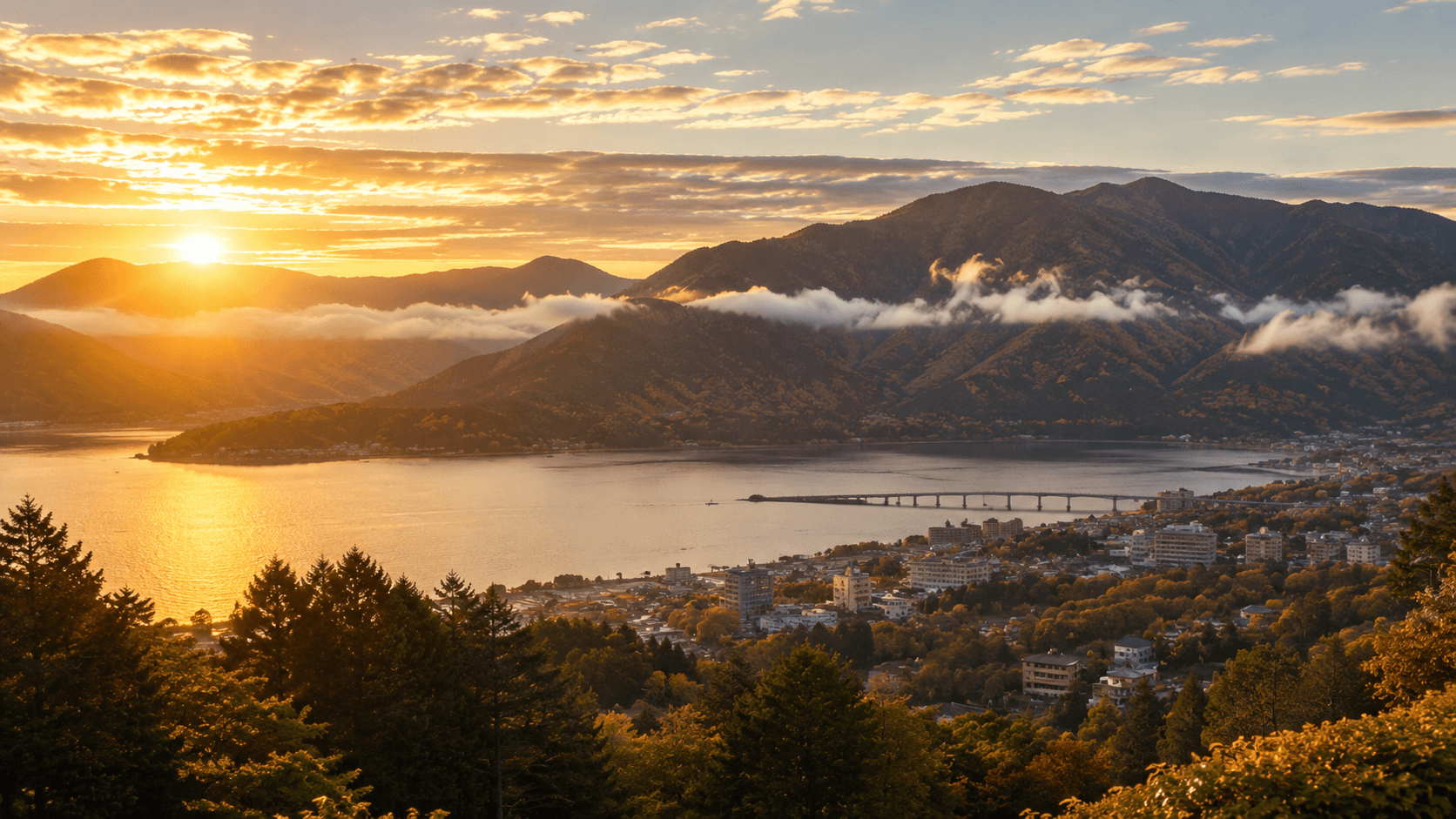
Following Haruki Murakami's A Wild Sheep Chase to Hokkaido's Bifuka and Shibetsu: A Literary Travel Guide
Trace the real Hokkaido towns behind Murakami's A Wild Sheep Chase — from the remote village widely believed to have inspired its fictional 'Twelve Falls Town' to the sheep-farming town where Murakami did his own research.
A Wild Sheep Chase
Haruki Murakami
A New York Times bestselling author—and “a mythmaker for the millennium, a wiseacre wiseman” (New York Times Book Review)—delivers a surreal and elaborate quest that takes readers from Tokyo to the remote mountains of northern Japan, where the unnamed protagonist has a surprising confrontation with his demons. An advertising executive receives a postcard from a friend and casually appropriates the image for an advertisement. What he doesn’t realize is that included in the scene is a mutant sheep with a star on its back, and in using this photo he has unwittingly captured the attention of a man who offers a menacing ultimatum: find the sheep or face dire consequences.
Somewhere in the mountains of Hokkaido, past the point where the train stops running, there's supposedly a sheep with a star-shaped mark on its back that can climb inside a person's mind and never leave.
"Perfect despair does not exist. Just as perfect hope does not exist."
That line, spoken deep in the book by a character who isn't quite human, is as close as A Wild Sheep Chase (羊をめぐる冒険, Hitsuji o Meguru Bōken) comes to explaining itself. Murakami's 1982 novel is the book where the strange, hard-to-classify blend of noir plot and quiet surrealism he'd become known for first fully clicked into place — a story about drift, complicity, and the low-grade dread of postwar Japanese prosperity, dressed up as a shaggy-sheep detective story. An unnamed narrator gets pulled north chasing a postcard and a rumor, out into the mountains near a village the novel calls Junitaki-cho — "Twelve Falls Town" — that doesn't exist on any map.
It doesn't exist, but it isn't invented from nothing either. By his own account, Murakami spent time in Hokkaido researching real sheep farming before he wrote the book — talking to people who actually raised sheep, not just imagining them. This trip follows that seam between the two: the real village most readers point to when they picture Junitaki-cho, and the real sheep-farming town where Murakami reportedly did his homework. It skips Sapporo on purpose — the novel's Dolphin Hotel is a vivid setting, but nobody claims a specific real building for it the way people do for these two towns, so this guide sticks to the stops with an actual place to stand.
Stop 1: Niupu, Bifuka Town — the village widely believed to be Junitaki-cho
No single place is officially confirmed as Junitaki-cho, but Niupu (仁宇布), a remote district of Bifuka Town in northern Hokkaido, is the most consistently cited candidate. The novel places its fictional village roughly a couple hundred kilometers from Sapporo by road, in the right neighborhood for Niupu, and describes a famously unprofitable branch railway line running through it — a detail that lines up with Bifuka's own former Bisai Line (美幸線), notorious in its day as one of the least profitable lines in the entire national rail network before it closed in the 1980s.
This is where the narrator's search runs out of road — not with a monster reveal, but with mountains, weather, and the sense of having gone further than anyone reasonable would. You don't need to have read the ending to feel it here. The remoteness itself is the payoff: this is what "the sheep was last seen somewhere in the mountains of Hokkaido" actually feels like once you're standing in it.
The area's real "Sixteen Falls" (仁宇布の冷水・十六滝) is worth lingering on for its own sake: a cluster of waterfalls fed by a spring that stays needle-cold, close to 6°C, even in the middle of summer. Stand there with your hand in the water and it's not hard to see why fans have long pointed to this as the likely source of the novel's "Twelve Falls" name — sixteen falls, twelve falls, the same cold water either way.
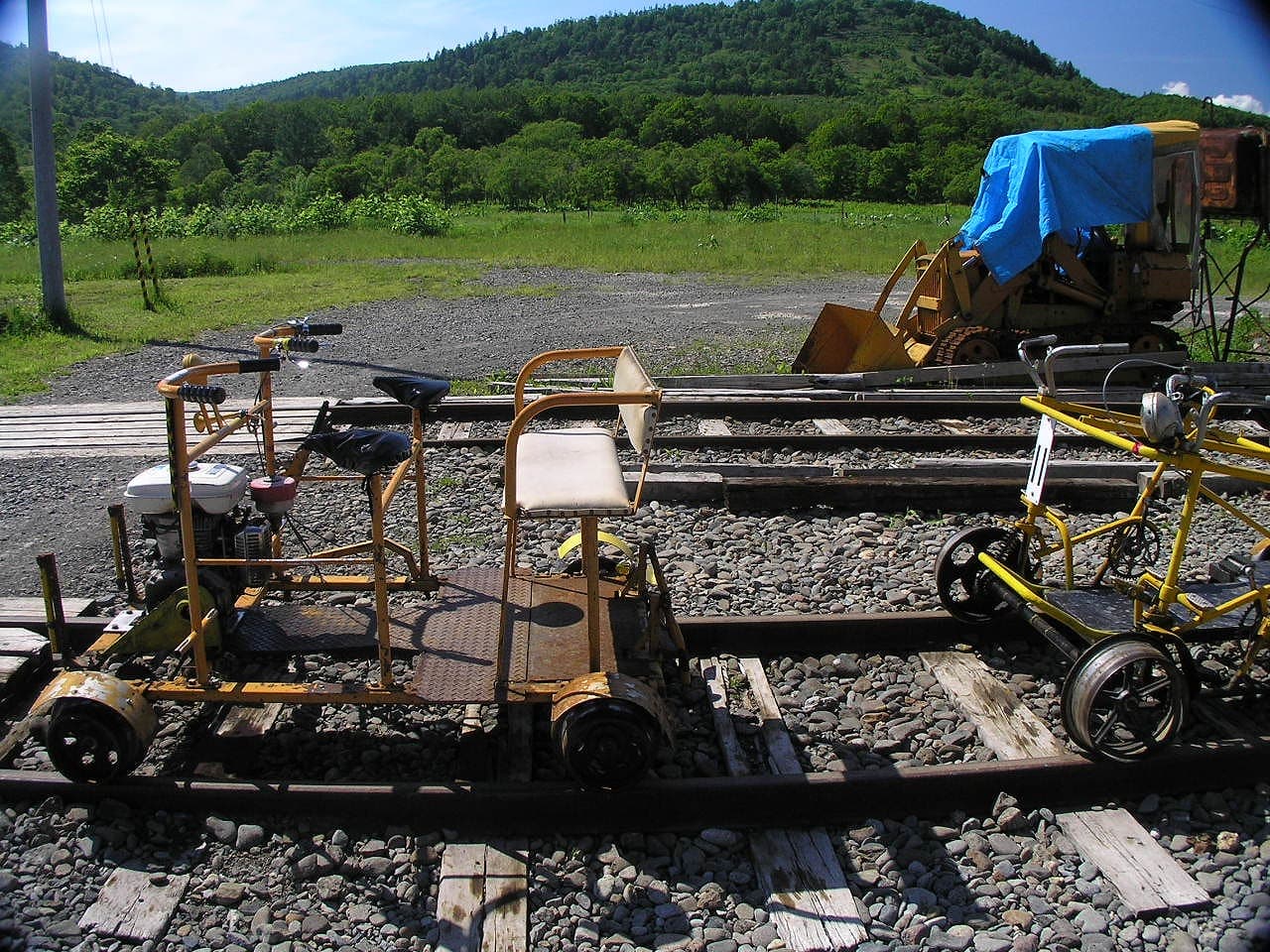
Where Niupu Station once stood, a rail-bike park called Torokko Okoku Bifuka now lets visitors pedal small trolleys along a preserved stretch of the old line through the forest.
- Getting there: Roughly 30 minutes by car from JR Bifuka Station; a reservation-based community bus also serves the area, but a car is far more practical.
- Good to know: The Sixteen Falls and cold spring are a short drive from the trolley park. A small cheese workshop near the trolley park keeps its own grazing sheep — not a confirmed literary site, but a fitting coincidence given the novel's subject.
Stop 2: Shibetsu — where Murakami reportedly did his research
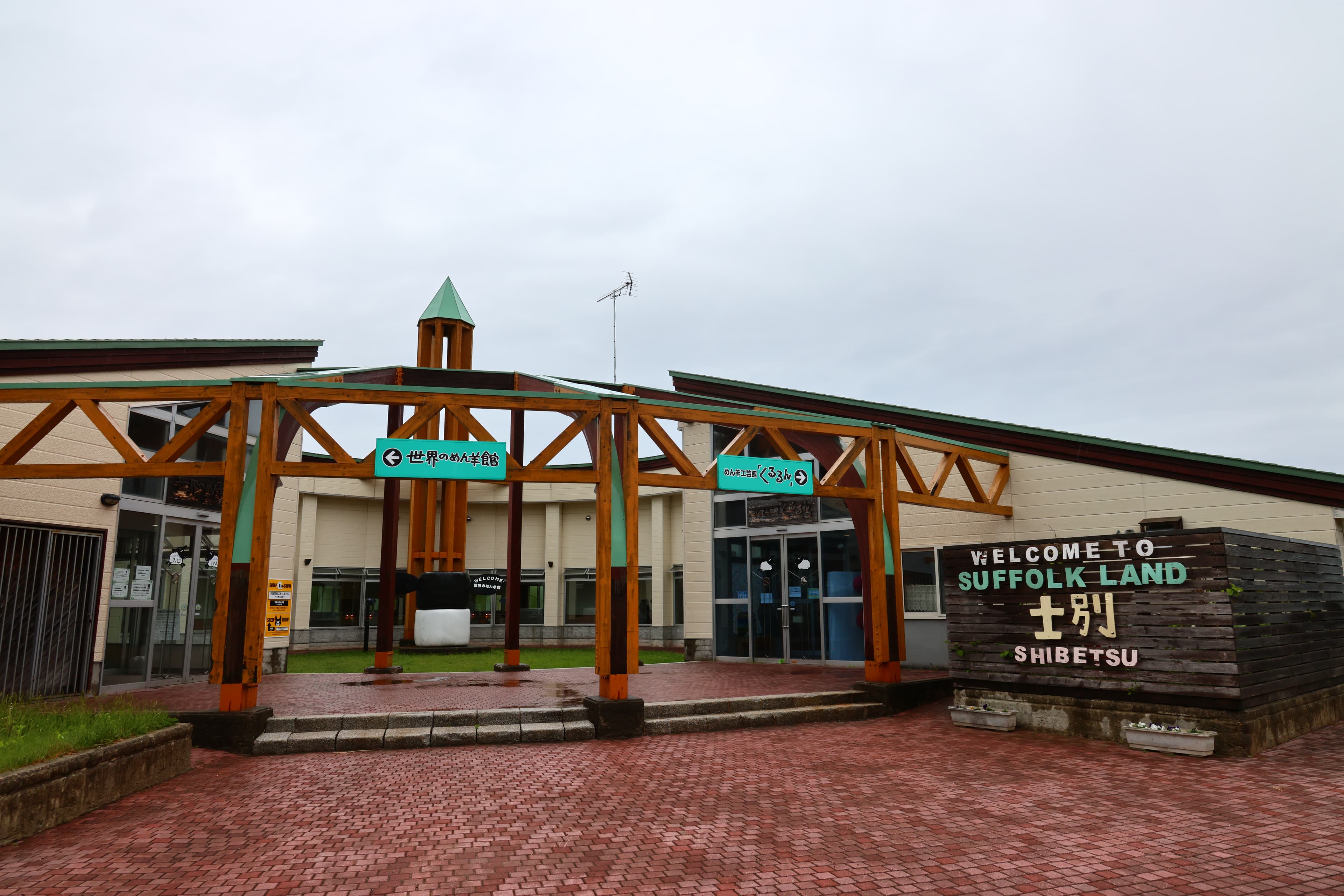
Rather than inventing Hokkaido sheep farming from nothing, Murakami went and looked at it. By most accounts, his research took him to Shibetsu, a city with a long-standing sheep-farming industry, sometime before the novel was published in 1982. That's the quieter, more powerful pilgrimage logic at work here: not "a place that resembles the book," but a place the author may have actually stood, notebook in hand, before he wrote a word of the mountain sections.
Shibetsu still leans into that identity today at Hitsuji to Kumo no Oka ("Hill of Sheep and Clouds") — a name that's worth just sitting with for a second. It's a hillside tourist farm where visitors can see dozens of rare sheep breeds from around the world grazing with a view over the surrounding countryside, and on a clear day it's easy to understand why a writer chasing the idea of a sheep that gets inside your head would come here first.
- Getting there: Roughly 10–15 minutes by car from JR Shibetsu Station; a scheduled connector taxi also runs a handful of trips a day between the station and the farm for travelers without a car, though it's worth confirming current times before you rely on it.
- Good to know: Best visited from late spring through autumn, when the sheep are out on the hillside pastures rather than indoors for winter.
Practical travel notes
- Best time to visit: Late spring to early autumn — Hokkaido's mountain roads and the Shibetsu sheep pastures are both at their best outside the snow season.
- Base yourself in: Asahikawa is the most practical hub for reaching both Bifuka and Shibetsu, each about two hours away by car — give yourself a little buffer rather than cutting it close.
- Language: both towns are small and rural; expect Japanese-only signage outside the main tourist facilities.
- The book itself: the standard English translation, titled A Wild Sheep Chase, is by Alfred Birnbaum.
Tabi Tales may earn a commission from hotel, tour, and book links on this page at no extra cost to you. See our affiliate disclosure for details.