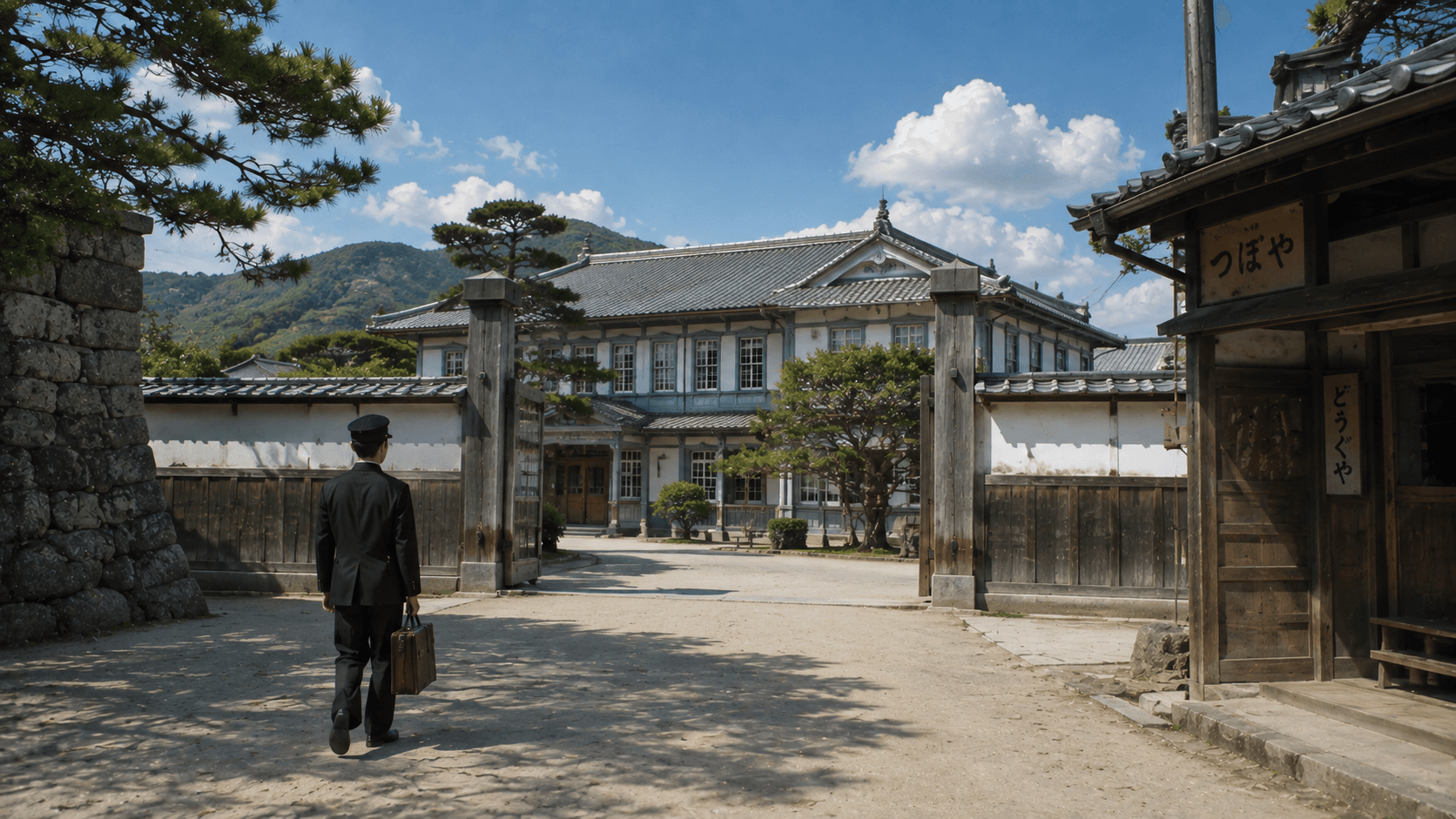
Natsume Soseki · Shikoku, Ehime
Following Natsume Soseki's Botchan to Matsuyama: A Literary Travel Guide
Trace the real Matsuyama locations behind Natsume Soseki's comic novel Botchan — from the bathhouse he barely disguised in fiction to the schoolyard where he actually taught — with practical travel notes for visiting Shikoku.
Botchan
Joel Cohn, Soseki Natsume, Natsume Soseki, Soseki Natsume
Publisher description: The setting is Japan's deep south, where the author himself spent some time teaching English in a boys' school. Into this conservative world, with its social proprieties and established pecking order, breezes Botchan, down from the big city, with scant respect for either his elders or his noisy young charges; and the result is a chain of collisions large and small.
A young teacher fresh off the boat from Tokyo climbs into a bathhouse pool built for soaking, not swimming, and — because he's hot-tempered and bored and can't help himself — starts doing laps. Within days, a notice goes up scolding him by name. That's the tone of Botchan (坊っちゃん, 1906) in miniature: a short, fast, comic novel about a hot-headed young man who takes a teaching post in the provinces and manages to clash with nearly everyone he meets. It's closely based on Soseki's own miserable, funny year teaching English in Matsuyama, on the island of Shikoku, and the city has embraced the connection so thoroughly that "Botchan" now names a train, a dessert, a clock, and half the souvenir shelf.
This guide follows the real sites behind the novel's thinly fictionalized Matsuyama, with practical notes for visiting.
Who was Natsume Soseki?
Soseki (1867–1916) is generally considered the most important novelist of modern Japan — his face spent nearly two decades on the ¥1,000 note. Before he was a full-time writer, he taught English literature, including the single unhappy year in Matsuyama that became the raw material for Botchan. Almost every novel of his maps onto a real place he lived or visited, which makes his bibliography an unusually good excuse for a trip — this guide is the first in a series following his major work around Japan.
Stop 1: Dogo Onsen Honkan (道後温泉本館) — the bathhouse Soseki barely bothered to disguise
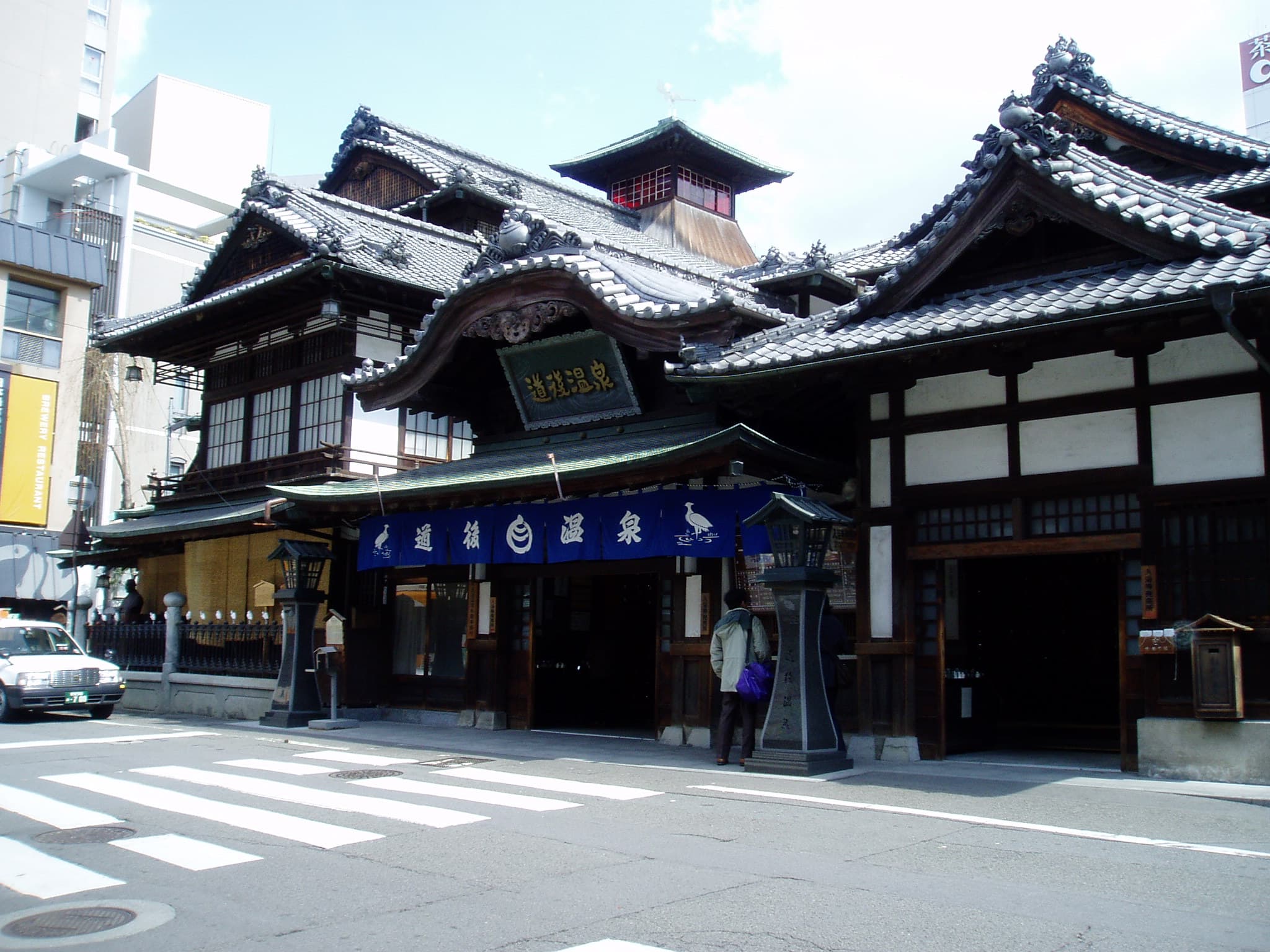
Botchan never actually says "Dogo Onsen" — the narrator calls it "Sumita no Onsen" (住田の温泉), a fig leaf so thin that every reader in Matsuyama immediately knew what he meant. Dogo Onsen itself is one of Japan's oldest hot springs, with a legendary history reaching back well over a thousand years; the wooden Honkan building standing there now dates to 1894 and is a registered Important Cultural Property.
Inside the Kami-no-yu bath — one of the Honkan's two bathing halls, and the one tied to the book — a wooden sign still hangs on the wall:
坊っちゃん泳ぐべからず "Botchan, no swimming."
It's a direct nod to the scene above: the real bathhouse quietly commemorating a swim its most famous fictional guest was never supposed to take. Stand in front of it and the line between the novel and the building basically disappears — this is the one moment on the whole trip where fiction and the actual room you're standing in stop being two different things.
A small "Botchan Room" upstairs keeps the connection going with photos and a bust of Soseki, alongside material on his close friend Masaoka Shiki — a haiku poet, also a Matsuyama native, and one of the most influential figures in modern Japanese poetry, who Soseki had known since their student days in Tokyo.
- Getting there: Dogo Onsen Station, the terminus of the Iyotetsu tram, then a short walk through a covered shopping arcade. From JR Matsuyama Station, take tram Line 5 (about 20 minutes); from Matsuyama-shi Station, Line 3 (about 15 minutes).
- Good to know: The Honkan underwent a multi-year seismic renovation and reopened fully in December 2024, so it's worth a quick check before you go in case anything has shifted since — and it's popular. Mornings and later evenings tend to be calmer than midday, when tour groups and day-trippers stack up; if getting into the water matters more to you than seeing every corner of the building, don't aim for the middle of the day.
Stop 2: The Botchan Train and Karakuri Clock, Dogo Onsen Station
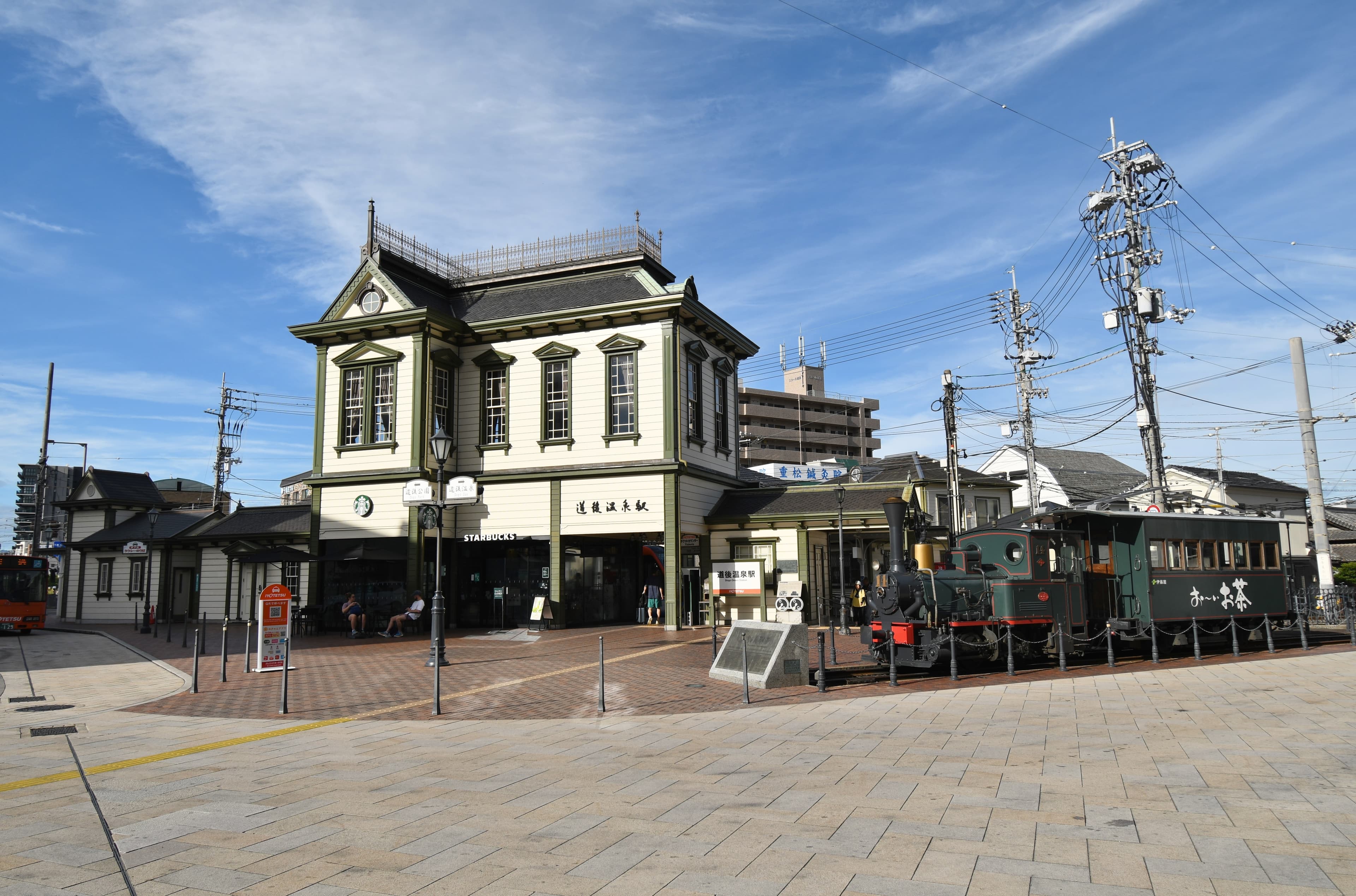
Right outside Dogo Onsen Station, two smaller attractions round out the theme. The Botchan Train (坊っちゃん列車) is a diesel-powered replica of the 1888 steam locomotives that ran Matsuyama's original tram line — retired in 1931, reintroduced as a tourist tram in 2001, complete with a whistle and simulated smoke. It runs on two loop routes connecting Dogo Onsen with Okaido and both of Matsuyama's main train stations. Just across the plaza, the Botchan Karakuri Clock (坊っちゃんカラクリ時計), built in 1994, rises and animates with characters from the novel on the hour.
- Getting there: Both are right at Dogo Onsen Station — the clock is in Hojoen park directly in front of it.
- Good to know: The Botchan Train currently runs weekends and holidays only, and costs considerably more than a normal tram (around ¥1,300 versus the ¥180 flat tram fare) — check the current schedule before planning a ride around it. The clock performs on the hour from roughly 8am to 10pm, with extra half-hour shows on weekends and in peak seasons.
Stop 3: Matsuyama Castle
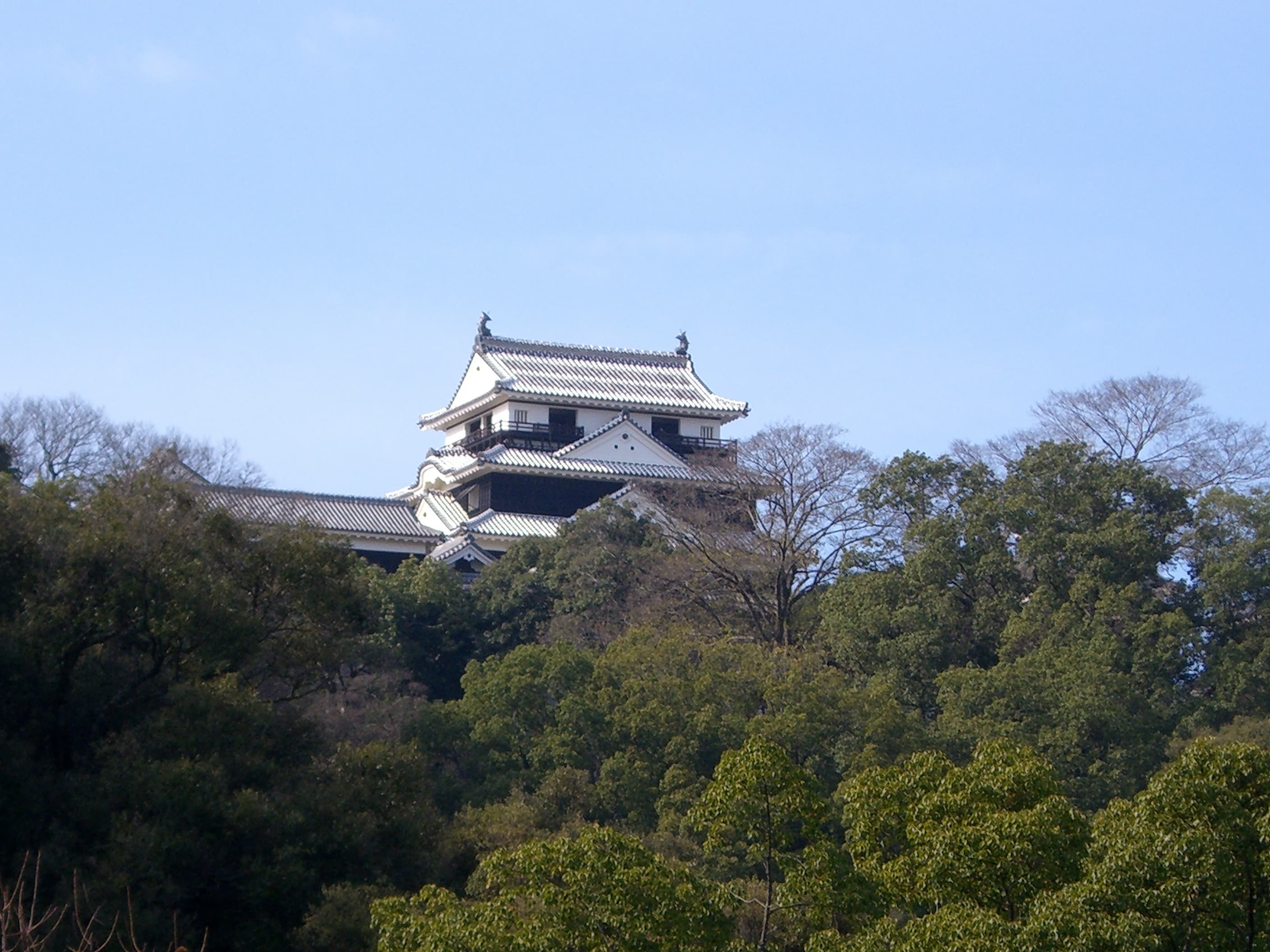
Botchan doesn't send its narrator up to the castle directly, but it looms over every description of the city he's stuck teaching in, and it's one of only twelve Japanese castles with an original, non-reconstructed keep — worth the detour on its own merits.
- Getting there: Ropeway or chairlift from Shinonome-guchi Station, a short walk from the Okaido tram stop, up to the Chojaganaru summit station — the ride itself is quick either way (a few minutes), for the same fare, and it's a further short walk from the summit station to the castle tower.
- Good to know: The chairlift is open-air and single-seat — take the ropeway instead if it's raining.
Stop 4: The former Matsuyama Middle School site
This is the one stop on this trip with nothing built for a visitor to see. The school where Soseki actually taught is long gone; an NTT West office stands there now, and the only trace is a small marker in Ichibancho. But picture it anyway: a homesick twenty-something in a borrowed teaching post, sizing up students and colleagues who'd become "Red Shirt," "Nodaiko," and the rest of Botchan's cast — the real classroom behind the fictionalized one, on this exact patch of ground. That's worth a minute of standing still even without a building to walk into.
- Getting there: A 2-minute walk from the Shiyakusho-mae ("City Hall") tram stop.
- Good to know: There's little to see beyond the marker itself — treat this as a five-minute add-on for completists rather than a destination in its own right.
Practical travel notes
- Best time to visit: Matsuyama is pleasant most of the year; spring cherry blossoms at the castle and autumn foliage are the two peak windows if you want the city at its most photogenic.
- Getting to Matsuyama: From Tokyo, fly into Matsuyama Airport (about 90 minutes from Haneda) or take the Shinkansen to Okayama and transfer to the JR Shiokaze limited express (roughly 6 hours door to door — check current timetables, since transfer buffers vary). From Osaka, Shinkansen to Okayama plus the Shiokaze runs about 4 hours, or fly direct. Airport buses connect Matsuyama Airport to JR Matsuyama Station (about 15 minutes) and on to Dogo Onsen (about 35 minutes).
- Base yourself in: Dogo Onsen itself — nearly everything in this guide is walkable or a short tram ride from there.
Tabi Tales may earn a commission from hotel, tour, and book links on this page at no extra cost to you. See our affiliate disclosure for details.