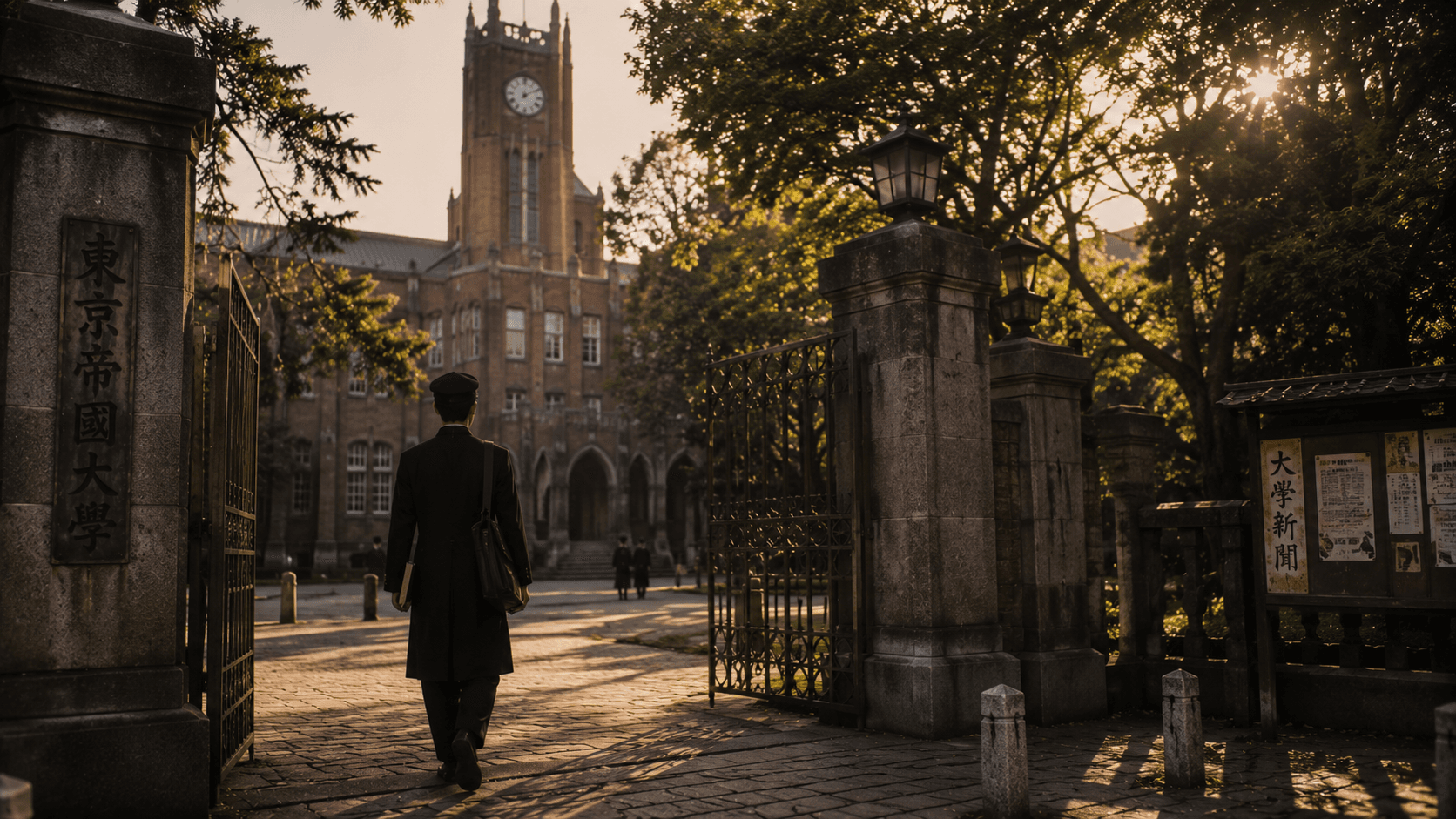
Following Natsume Soseki's Sanshiro to Tokyo: A Literary Travel Guide
Walk Sanshiro's own route onto the University of Tokyo's Hongo campus — through the gate the novel names outright, to the pond that now carries its title character's name.
Sanshiro
Natsume Soseki
One of Soseki's most beloved works of fiction, the novel depicts the 23-year-old Sanshiro leaving the sleepy countryside for the first time in his life to experience the constantly moving 'real world' of Tokyo, its women and university. In the subtle tension between our appreciation of Soseki's lively humour and our awareness of Sanshiro's doomed innocence, the novel comes to life. Sanshiro is also penetrating social and cultural commentary.
A young man gets off the tram at Ochanomizu, climbs into a rickshaw, and rides it up toward a university he's never seen in a city he doesn't understand yet. That's Sanshiro on the first pages of Natsume Soseki's 1908 novel — freshly arrived from rural Kyushu, quietly overwhelmed by Tokyo, by academia, by a young woman named Mineko he hasn't even met yet. The book spends the rest of its length watching that overwhelm never quite resolve into confidence.
Unusually for this series, you don't have to squint to find where the novel happens. The University of Tokyo's Hongo campus — Tokyo Imperial University in Soseki's day — still stands where Sanshiro walked onto it, and the university has leaned into the connection: one of its ponds now carries the book's title.
This is the shortest, easiest trip in this series: a single central Tokyo campus, free and open to the public, following close to the route Sanshiro himself takes on arrival.
Stop 1: Ochanomizu to Akamon — Sanshiro's own route in
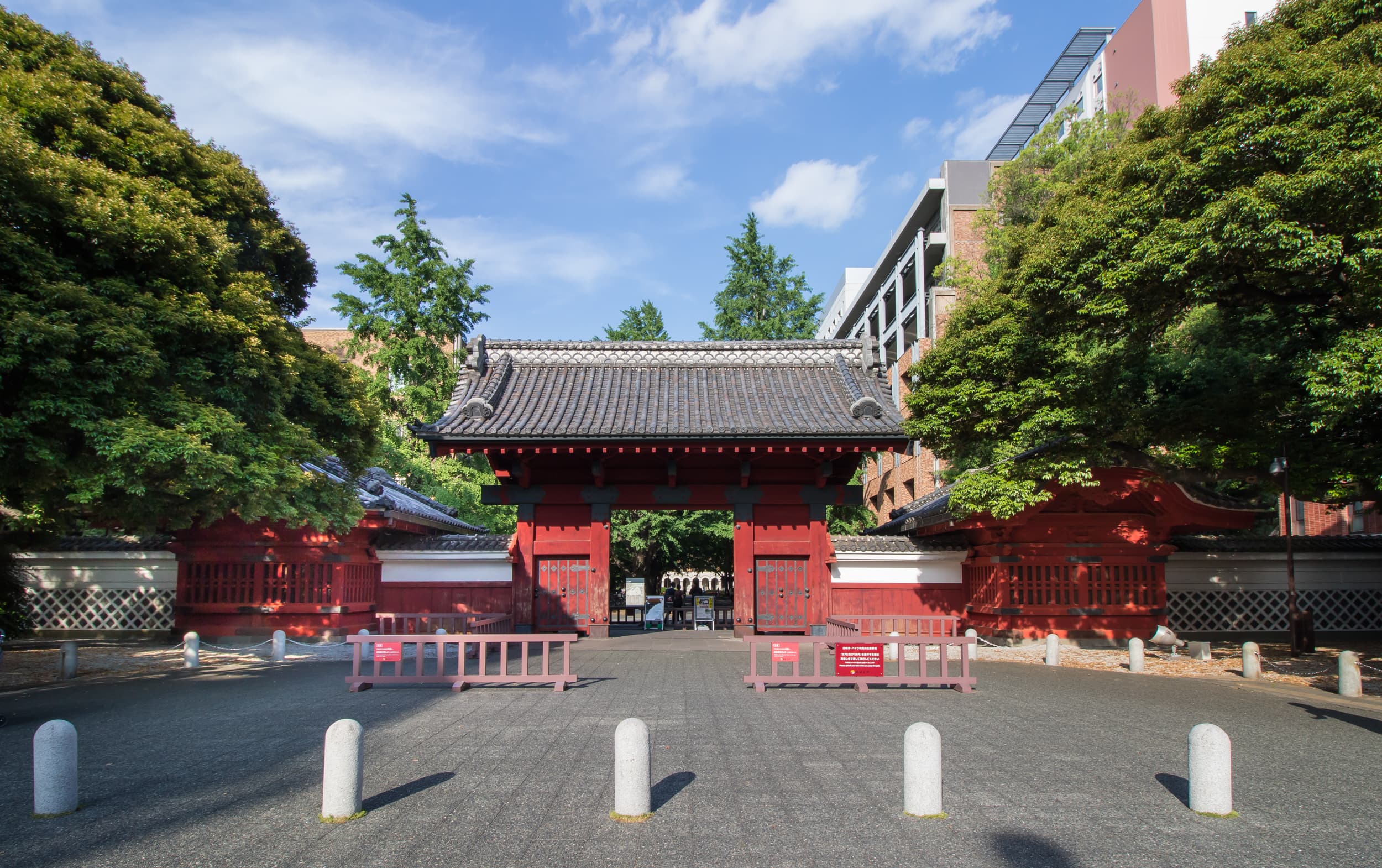
In the novel's opening pages, Sanshiro's rickshaw carries him in through the Red Gate on his way onto the university grounds — the gate is named outright in the text, not something readers have had to infer or reconstruct from vague description. The Akamon ("Red Gate," 赤門) is still standing, and it's Hongo campus's best-known landmark.
It was built in 1827, and the color isn't decorative: a daimyo's gate was painted red only when he married a shogun's daughter, which is exactly what happened here when Maeda Nariyasu wed Tokugawa Ienari's daughter, Yasuhime. Now an Important Cultural Property, it's the one piece of Sanshiro's Tokyo you can be certain he actually passed through.
- Getting there: Ochanomizu Station (JR Chuo/Sobu Lines or Marunouchi/Chiyoda Metro lines) if you want to trace Sanshiro's exact starting point; otherwise Hongo-sanchome Station (Marunouchi or Toei Oedo Line) is a short, direct walk to the gate itself.
- Good to know: As of this writing, Akamon is closed to passage for a multi-year restoration (November 2025–September 2027) — you can see and photograph it from outside, but can't walk through it the way Sanshiro does. Enter campus through one of the other open gates nearby instead.
Stop 2: Sanshiro Pond (三四郎池)
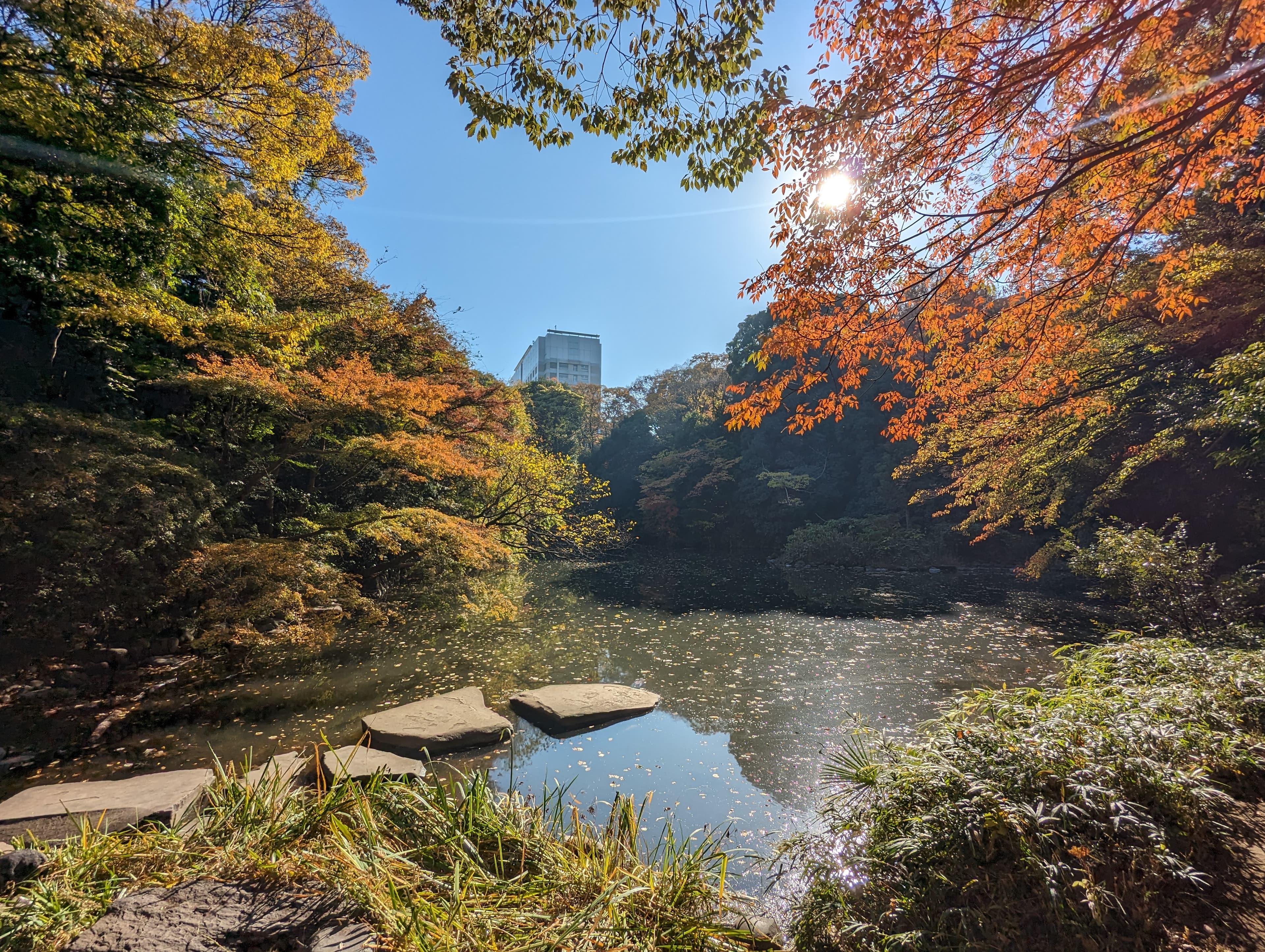
Officially Ikutoku-en Shinji-ike (育徳園心字池) — a garden pond laid out in the 17th century when this whole campus was a feudal lord's estate, not a university — it picked up the name "Sanshiro Pond" in popular usage because it's where Sanshiro first meets Mineko in the novel. Feudal garden, then Meiji-era university grounds, then a fictional first meeting that stuck to the map: that layering is most of why the spot feels worth the walk.
The pond itself is small and irregular, banked steeply enough on some sides that the water disappears from view until you're right on top of it, with the sound of the campus dropping away almost as soon as the path bends in among the trees. Turtles sun themselves on the rocks along the edge most days.
The text doesn't pin the meeting to one exact, identifiable spot matching the pond as it exists today, so treat this as the traditionally accepted setting rather than a precise scene location.
Still, it's easy to believe, standing at the water's edge, that this is where a young man from Kyushu first felt entirely out of his depth in front of someone — the moment the novel's quiet unease about Tokyo, academia, and Mineko all comes into focus at once, on the edge of exactly this kind of water. The campus doesn't ask you to see anything specific in the pond, just to stand somewhere quiet enough to feel what Sanshiro felt.
- Getting there: A short walk from Akamon into the campus interior; alternatively, Todaimae Station (Namboku Line) puts you about a minute from the main gate, with the pond another 5–10 minutes' walk in.
- Good to know: The pond and surrounding campus are free and open to the public for self-guided walking, roughly 7am–6pm daily. One note: campus access is sometimes restricted on Japan's Common Test day and the university's own entrance exam days in January and late February, so it's worth checking before visiting in that window.
Practical travel notes
- Best time to visit: Mid-November to early December for autumn foliage around the pond, or spring for fresh green leaves — midsummer means heat, humidity, and mosquitoes around the water, which flattens the mood fast.
- Base yourself in: Anywhere in central Tokyo — Hongo is a short trip from most neighborhoods, and this pairs easily with a single afternoon.
- Language: Central Tokyo, well within normal tourist infrastructure.
- The book itself: the standard English translation, titled Sanshiro, is by Jay Rubin, published by Penguin Classics.
Tabi Tales may earn a commission from hotel, tour, and book links on this page at no extra cost to you. See our affiliate disclosure for details.